Tripping the Rift is a Canadian-American adult science-fiction animated series produced in 3D computer-generated imagery. The series combines science-fiction parody, crude humor, slapstick violence, and sexual situations, targeting in particular the imagery of Star Trek, Star Wars, and 2001: A Space Odyssey.
Leggi tutto: Tripping the Rift: best sexy scenes | Sexy and Forgotten #7The project originated in the late 1990s through the collaboration between Chris Moeller and Chuck Austen, who developed an animated science-fiction comedy for the internet. The first short film, Love and Darph, was released in 1998 through Level13.net, a platform connected with Film Roman, and helped bring the project to the attention of an online audience.

The popularity of the shorts led to the idea being developed into a television series. Tripping the Rift premiered in 2004 on Canada’s Space channel and on the American Sci Fi Channel, which presented it as one of its first animated productions specifically aimed at adults. In Canada, the series was also broadcast by Teletoon, which participated in the production of the third season. The show consists of three seasons, broadcast between 2004 and 2007. A film for the home-video market was released in 2008.

The transition from short films to television also involved reducing some of the more explicit elements. Certain sexual references and instances of nudity found in the original material were filtered or covered in the television version and in the film; even the edition promoted as “uncensored” retained forms of visual censorship.

The story follows the crew of the spaceship Jupiter 42, who carry out smuggling operations, escapes, scams, and various adventures across a galaxy dominated by empires, dictatorships, and alien species. The captain is Chode McBlob, a purple, grotesque alien who is vain, selfish, and obsessed with sex. His ship and crew form a deliberately distorted and ridiculous version of the classic exploration spacecraft and its heroic commanders.
Among the main crew members is Six, a female-looking cyborg designed as a sex machine. She is joined by T’Nuk, an alien pilot with a deliberately grotesque appearance; Whip, Chode’s young nephew; and Gus, the robotic engineer who is constantly subjected to the captain’s verbal abuse. The group is completed by Bob, the ship’s computer, whose anxious behavior, alcohol dependency, and emotional reactions make him seem more like a crew member than a machine.

The recurring antagonist is Darph Bobo, a parody of Darth Vader. His presence allows the series to mock the great villains of science fiction: instead of being a tragic and imposing figure, Darph Bobo is placed in absurd, vulgar, and frequently ridiculous situations. The episodes generally follow a self-contained structure and put the crew up against eccentric planets, interstellar wars, societies constructed as caricatures, and missions that quickly spiral out of control.

The tone is deliberately irreverent. The series uses science fiction as a framework for sexual satire, physical comedy, and parodies of film and television. The result does not aim for realism or psychological depth, but for a comic distortion of genre clichés: the hero becomes an opportunist, the robot becomes a target for abuse, the great galactic empire turns into an absurd bureaucracy, and seduction becomes a constant source of misunderstandings.

Who is Six of One?
Six of One, also known as Six, is a female-looking android or cyborg who belongs to the crew of the Jupiter 42. The character was voiced by Gina Gershon in the first season, Carmen Electra in the second, and Jenny McCarthy in the third.

Her narrative identity is built around the contrast between an idealized sci-fi pin-up body and her role as an active member of the crew. Six of One has an intentionally exaggerated appearance, including a highly accentuated silhouette, revealing clothing, and a self-confident attitude. Her sensuality is not an occasional detail but one of the character’s central comic devices. The series presents her as a “sex cyborg,” an idea that makes seduction part of her design and uses that premise to create jokes, blackmail, misunderstandings, and farcical situations.

It is important, however, not to describe her solely as a sexual object. Six of One is also a functional member of the crew and, in several situations, uses her appearance and charm as a deliberate strategy. Her sensuality can become a way to obtain information, distract an opponent, or manipulate someone.
At the same time, the series uses her to ridicule the male fantasy of the artificially constructed “perfect woman.” The character is therefore simultaneously a parody of the pin-up, the femme fatale, and sexualized technology.

Sexy scenes with Six of One
Six of One’s sensuality is primarily caricatural. Her design emphasizes unrealistic physical proportions, flirtatious movements, and performative poses, while the dialogue focuses on her attractiveness and supposed sexual availability. This approach is part of the series’ overall tone, which contains numerous sexual jokes and adult situations throughout its seasons.

Six of One’s sexy scenes in which she appears are generally constructed as gags rather than as realistic erotic moments. Six of One is shown seducing or distracting male characters, taking part in situations where her body is treated as a bargaining tool, or becoming involved in misunderstandings related to her programming as a sexual android. In one episode, for example, Chode forces her to massage a planet’s leader in an attempt to obtain money. The situation uses the idea of seduction as an imposed service and turns it into a scene of crude comedy.

Nudity, on the other hand, is often partial, implied, or censored. The series relies on suggestive shots, skimpy costumes, showers, dressing rooms, and jokes in which Six of One’s body is covered by objects or graphic elements. When the context suggests that she is naked, the presentation usually cuts away before showing explicit details or conceals them with balloons and other comic devices. Even the 2008 film, although promoted as uncensored in terms of its dialogue, continues to obscure nudity visually.

For this reason, Six of One works best as a character of sexual satire rather than as an autonomous erotic figure. Her sensual image serves to parody pornography, comic-book heroines, fantasies about androids, and the use of the female body as a promotional device. The scenes in which she appears can be explicit in their language and intentions, but nudity is normally treated in a farcical and censored manner, reflecting the particular balance between provocation and comedy that defines Tripping the Rift.
Six of One nude: best sexy scenes


Six of One’s showering scenes


Informazioni sull'autore

Related posts:
 Tribute to Bulma | Most iconic sexy and tickling scenes
 Tribute to Enrico Marini | Most iconic sensual artworks and sexy comics
 Top sexiest DC Comics women
 Top sexiest Marvel Comics women
 Best sexy distraction scenes
 Tribute to Lucy Heartfilia | Most iconic sexy and tickling scenes
 Tribute to Nami | Most iconic sexy and tickling scenes
 Top underrated sexy comic characters
 Tribute to Power Girl | Most iconic sexy and tickling scenes
 Tribute to Lara Croft | Most iconic sexy scenes
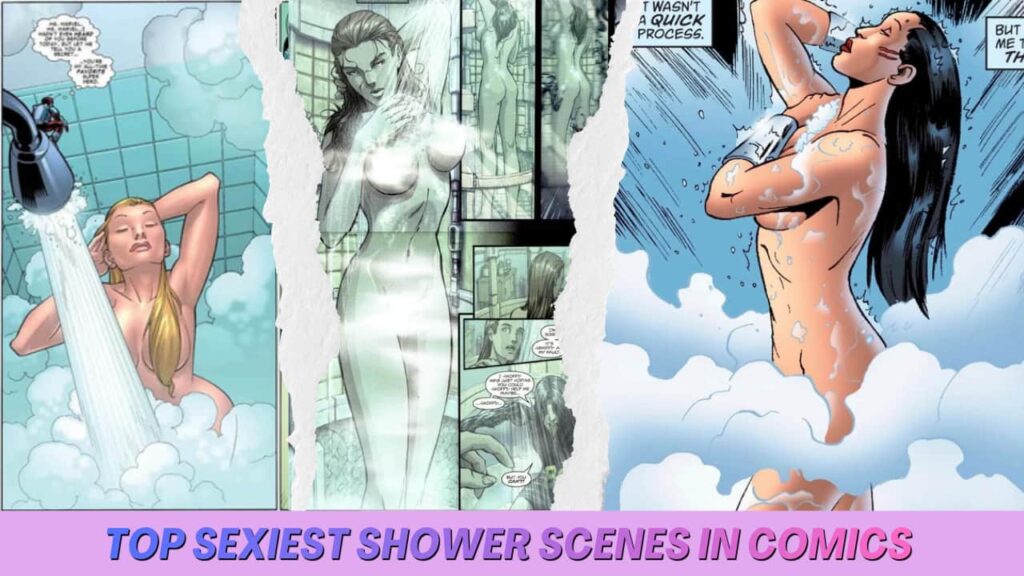 Best sexy shower scenes in comics
 Tribute to Lobo | Most iconic sexy scenes