
Wonder Woman is Princess Diana of Themyscira, an Amazon warrior created by psychologist William Moulton Marston and artist Harry G. Peter. She first appeared in All Star Comics #8 in 1941 and quickly became one of DC’s foundational superheroes, alongside Superman and Batman. DC describes her as “beautiful as Aphrodite, wise as Athena, swifter than Hermes, and stronger than Hercules,” with powers including super-strength, invulnerability, flight, combat skill, healing, and magical weaponry.
Leggi tutto: Tribute to Wonder Woman | Most iconic sexy scenes
Her classic visual identity combines a red bodice, blue star-spangled lower garment, red boots, tiara, indestructible bracelets, and the golden Lasso of Truth. Those elements have been redesigned repeatedly, but they remain central to her recognizability.
Wonder Woman’s sex appeal
Wonder Woman has often been drawn as tall, athletic, and classically idealized—an Amazonian warrior whose physique signals strength rather than frailty. But her depiction has never been fixed: artists have alternated between a more statuesque, heroic build and a more conventional pin-up-influenced figure, depending on the era, artist, and intended audience.

William Moulton Marston created Wonder Woman as a feminist heroine, but he also deliberately incorporated eroticized imagery. Her early costume—a strapless red bodice, short starred skirt, boots, and tiara—was closer to a theatrical swimsuit than to practical armor, making her body immediately central to her visual identity.
This was not accidental. Marston wanted a heroine who embodied beauty, love, and power, and he used her appearance to make female strength visually glamorous rather than desexualized. The result was a character who could represent women’s liberation while also functioning as a conventional male-gaze fantasy figure.

Her costume has been a particular site of this debate. Scholars note that the outfit has continually shaped feminist readings of the character, because it can signify both heroic confidence and the reduction of a powerful woman to her body. The question is not simply whether Wonder Woman is sexualized, but who controls that sexualization: Diana herself, the women who identify with her, or the male artists and audiences who consume her image.
Over time, artists have alternated between emphasizing her athletic power and exaggerating conventional beauty standards. Some periods favored a more muscular, armored, and practical warrior; others returned to a slimmer waist, larger bust, and more revealing costume. These shifts reflect changing comic-book aesthetics and market pressures rather than any canonical physical “truth.”
Modern adaptations have often tried to resolve the contradiction by making her costume more armor-like while preserving its iconic silhouette. Even then, debates continue over whether the redesign empowers Diana or merely repackages the same idealized body in a more acceptable form.
Wonder Woman’s breast


Is Wonder Woman bustier than Power Girl?
Power Girl is generally depicted with a more overtly exaggerated, voluptuous physique, and her costume’s circular chest window has long been a deliberately conspicuous design feature. Wonder Woman’s design, by contrast, has usually emphasized an athletic, classical warrior silhouette: broad shoulders, a strong torso, and a costume rooted in Amazonian and patriotic imagery. Power Girl has more often been drawn as the more overtly busty DC heroine. Wonder Woman is better characterized as powerful, statuesque, and glamorous, but not canonically defined by breast size.


Wonder Woman’s bottom


Wonder Woman nude: Diana Prince’s sexy scenes in comics


Wonder Woman’s bondage comics
Under Marston, Wonder Woman was frequently chained, roped, gagged, manacled, or otherwise restrained; in early stories, being bound by a man could deprive her of her Amazonian strength.
This imagery has been interpreted both as fetishistic and as a metaphor for women’s emancipation: Marston explicitly connected chains and escape to women breaking free from patriarchal control. The feature was controversial enough that the character faced criticism in the 1940s for the sexual nature of her costume and repeated restraint scenes.


Alternative version
Superwoman
Superwoman is a recurring DC name most associated with Lois Lane in alternate realities, though other versions exist, including villainous Amazon-like counterparts. In the Wonder Woman-inspired versions, she is typically portrayed as a powerful but ruthless warrior who possesses Amazonian abilities without Diana’s compassion or diplomatic restraint. Visually, she is often drawn as a tall, imposing superheroine with a classical athletic build, usually wearing a costume that deliberately echoes Wonder Woman’s red, blue, and gold iconography.


The Blue Amazon
A version of Wonder Woman set against the backdrop of German Expressionism. She appears nude in some scenes as a stripper.


Sexy Wonder Woman’s pastiches
Power Princess
Princess Zarda is Marvel’s most direct Wonder Woman pastiche: a superhuman princess from the hidden island of Utopia Isle, created by J. M. DeMatteis and Don Perlin and first appearing in Defenders #112 in 1982.
The Wonder Woman parallels are deliberate: an isolated island civilization, a royal warrior emissary, superhuman strength and flight, and a role as the Squadron’s leading woman. Hyperion functions as the Superman analogue and Nighthawk as the Batman analogue, while Zarda fills Diana’s role.


Promethea
Promethea is Alan Moore and J.H. Williams III’s reality-bending heroine from America’s Best Comics. She is an embodiment of imagination and mystical storytelling rather than a direct Wonder Woman clone, though her visually striking, idealized female form invites comparison. Artists have portrayed her as tall, luminous, and otherworldly, often with flowing hair, elaborate costumes, and a body design that shifts according to the story’s surreal visual logic.

Queen Maeve
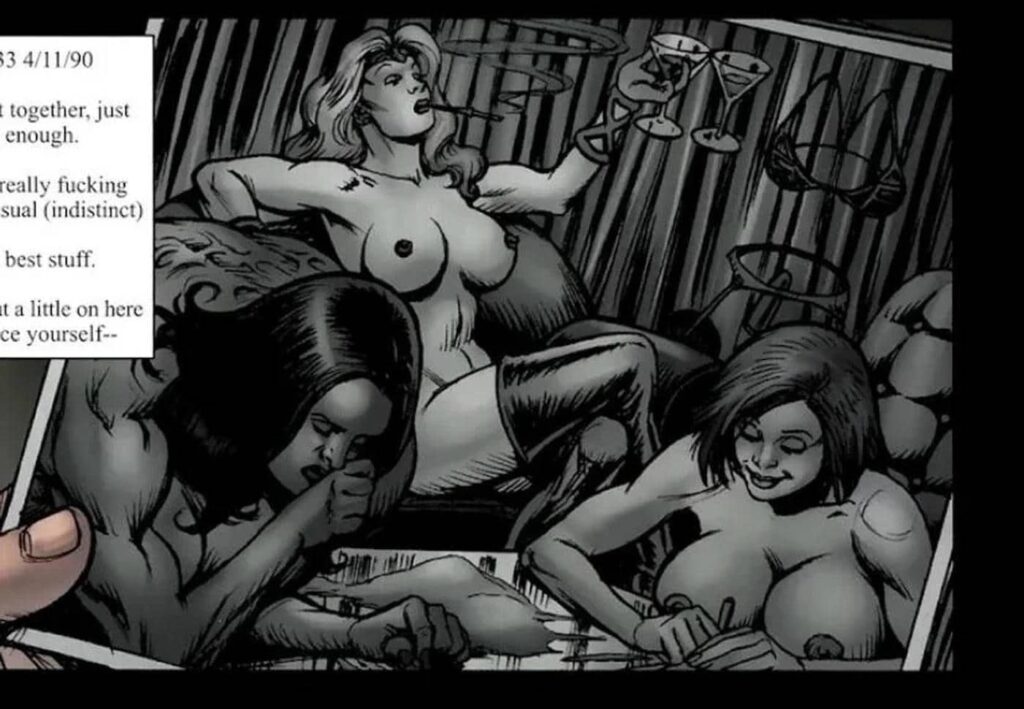
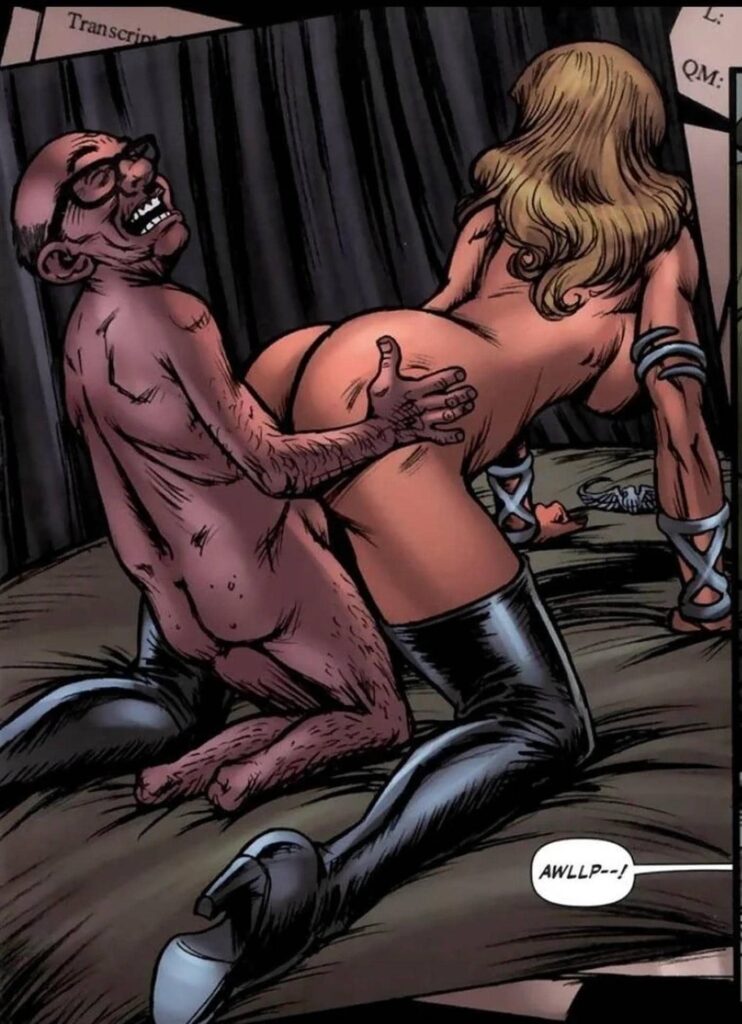
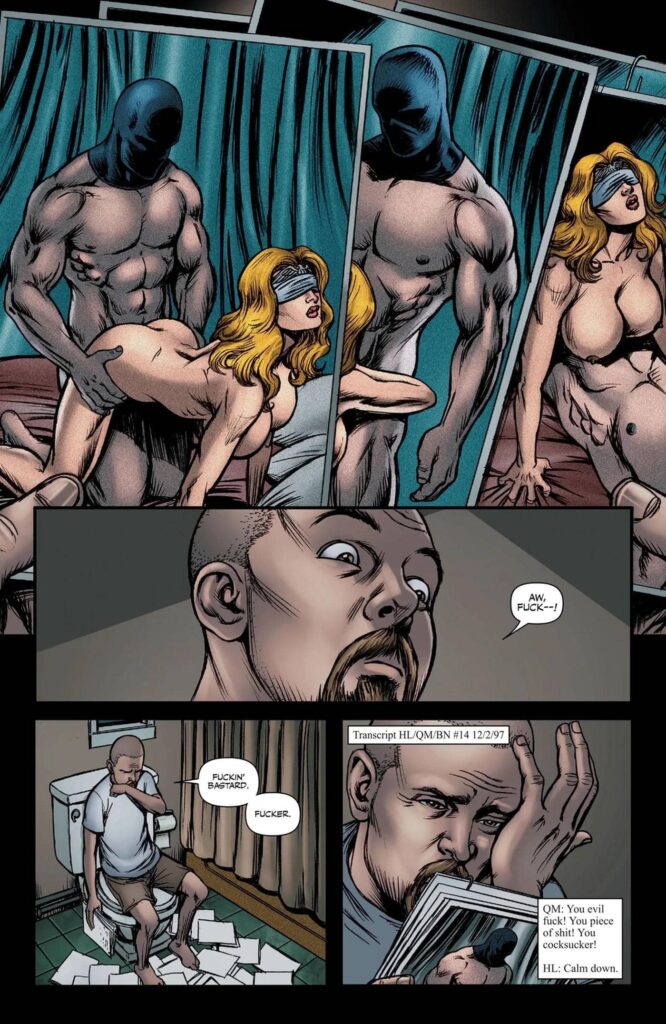
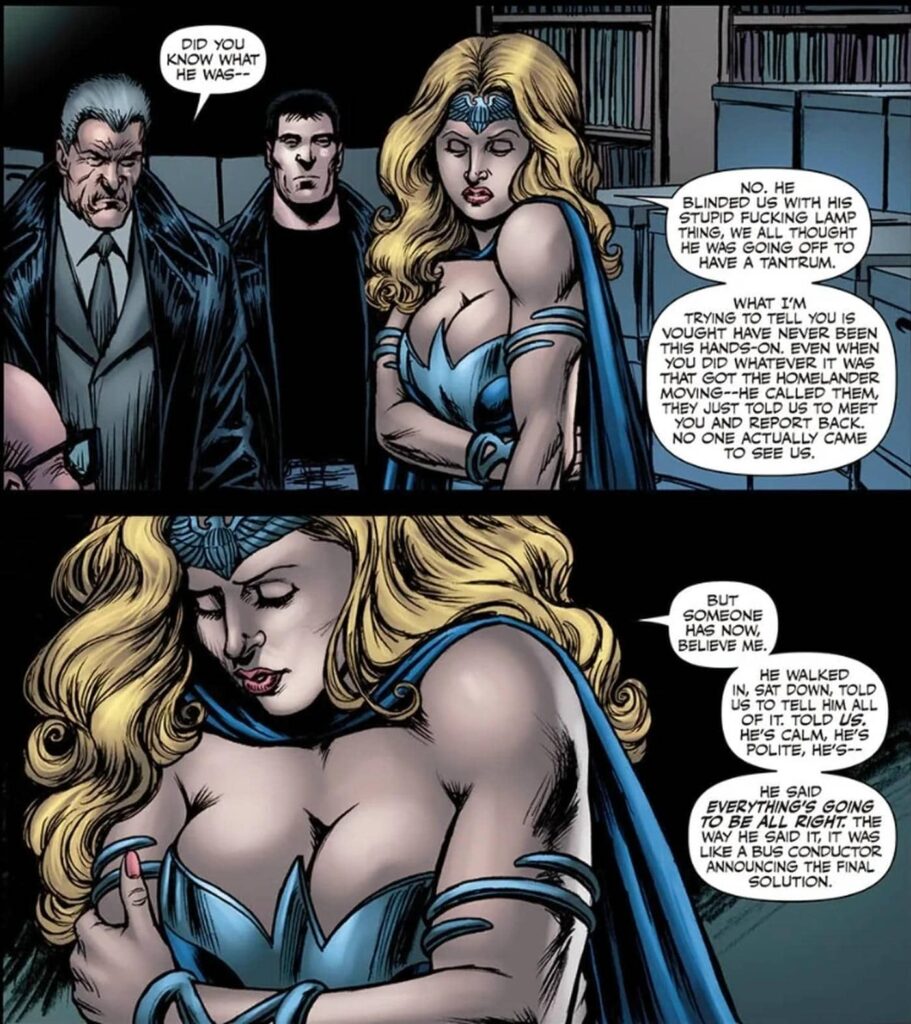
Queen Maeve is a cynical, hard-drinking superhero in The Boys, created as a deliberate critique of Wonder Woman-type icons. She has superhuman strength and durability, but unlike Diana she is portrayed as weary, compromised, and trapped by corporate image-making. Her design emphasizes a powerful, muscular yet conventionally glamorous physique, with an Amazon-style costume that makes the Wonder Woman influence explicit.
War Woman
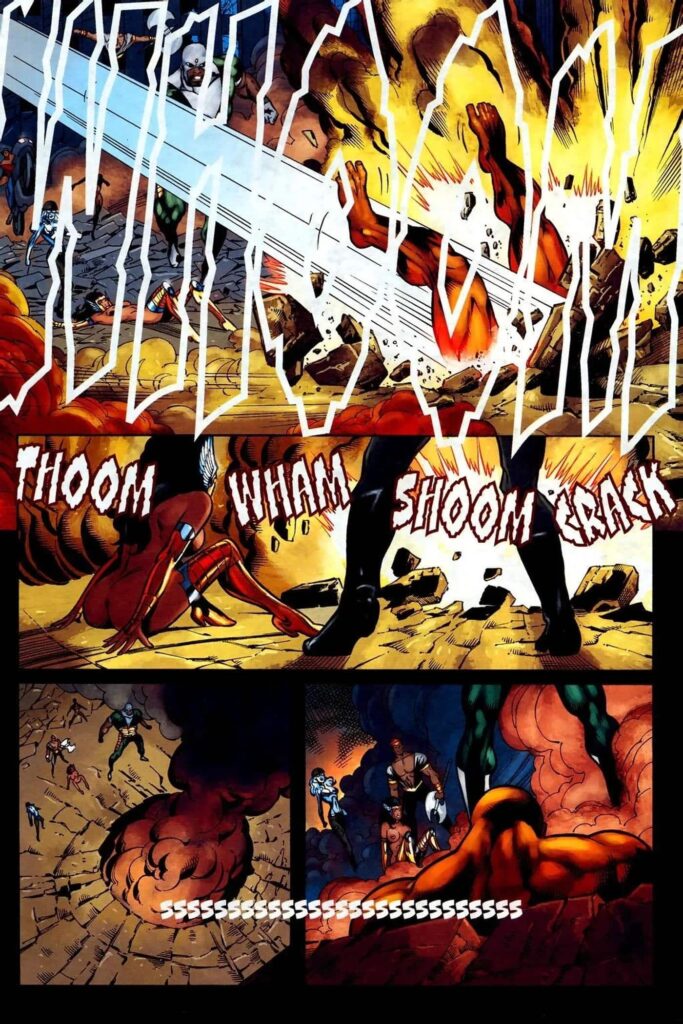
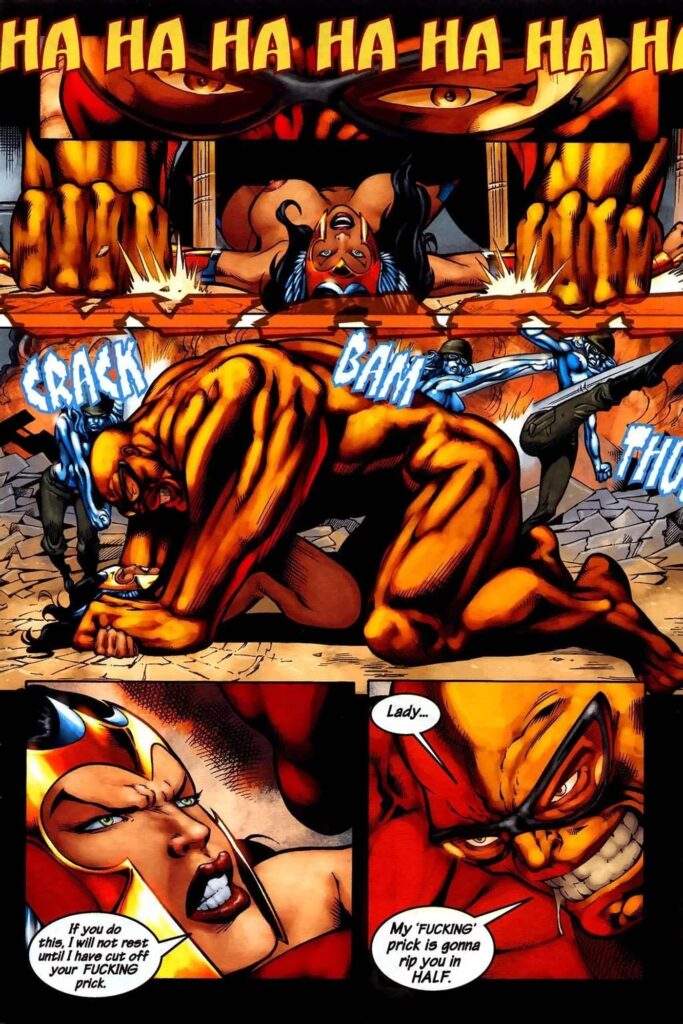
War Woman is a member of the Guardians of the Globe in Robert Kirkman’s Invincible. She is an Amazon-inspired superhero with superhuman strength, flight, and combat ability, but the series treats her more as a flawed public figure than a moral ideal. Her visual design is a clear pastiche of Wonder Woman: dark hair, a red-and-blue costume, and a strong, statuesque warrior build.
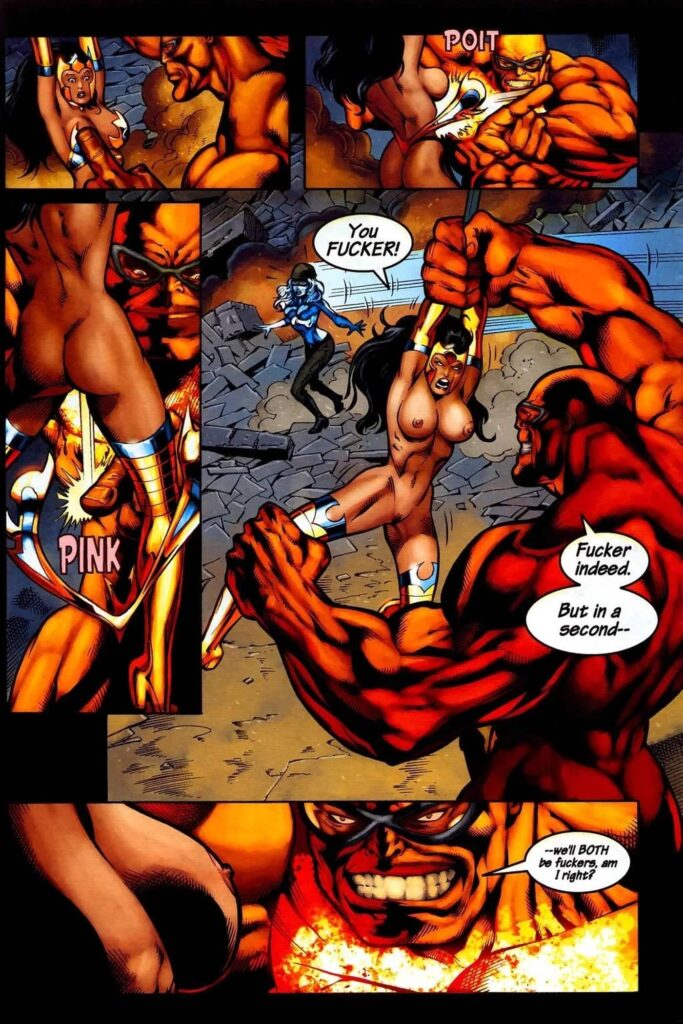

Winged Victory
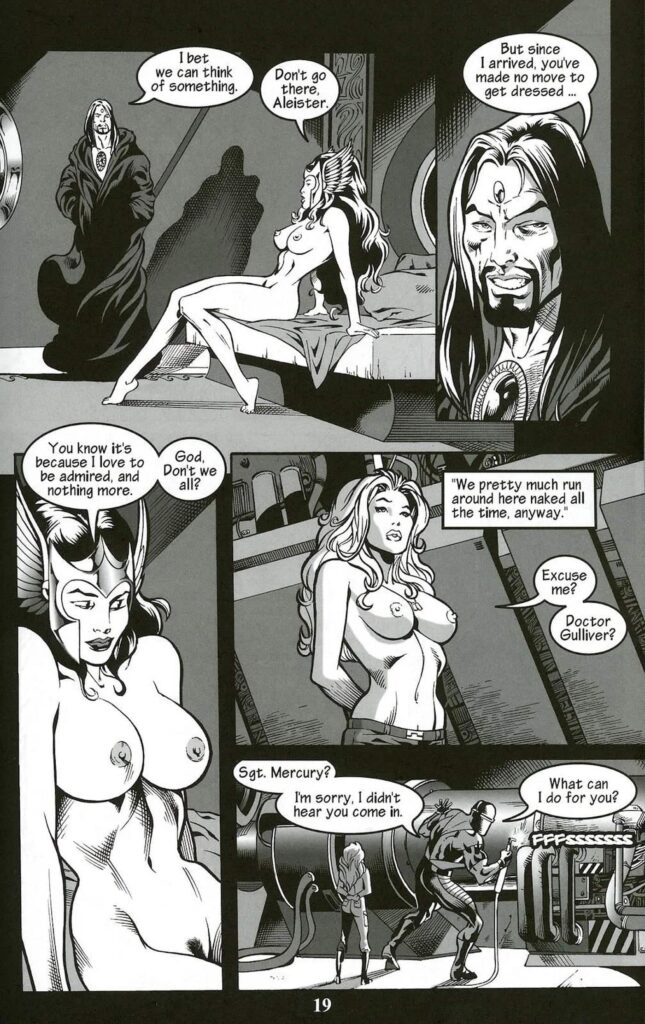
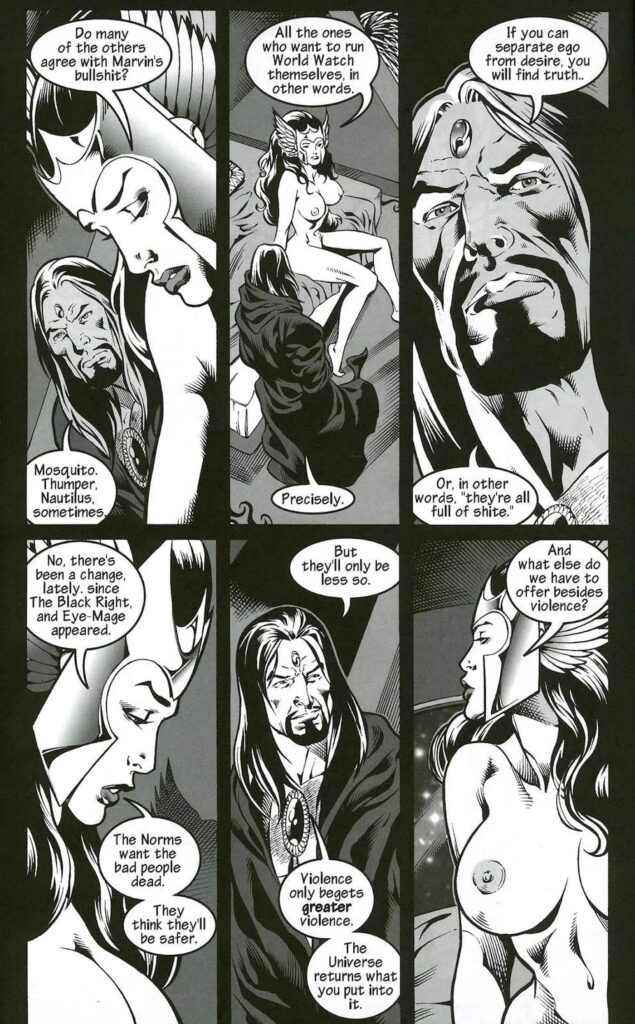
Winged Victory is a superheroine from Kurt Busiek’s Astro City, inspired partly by Wonder Woman and classical winged goddess imagery. She is a formidable, public-facing hero whose appearance emphasizes divine majesty rather than conventional pin-up glamour. Artists usually depict her as tall and athletic, with large wings, classical drapery or armor-like costume elements, and a commanding physical presence.


Zealot
Zealot is a Kherubim warrior and founding member of Wildstorm’s Wildcats, created by Jim Lee. She is an ancient, deadly fighter with enhanced strength, speed, healing, and centuries of combat experience. Her usual design is sleeker and more aggressive than Wonder Woman’s: long dark hair, a form-fitting black costume, and a lean, athletic physique that conveys lethal precision rather than classical Amazonian grandeur.


Wonder Woman’s sexiest Amazons


Artemis
Artemis of Bana-Mighdall is a brash champion of the Egyptian Amazon tribe and a major rival, ally, and occasional replacement for Diana. She has held the Wonder Woman title and is regarded as one of the fiercest Amazon warriors in DC continuity. She is commonly drawn as powerfully built, red-haired, and battle-hardened, with a more rugged, aggressive physical style than Diana’s polished classical look.


Cassandra Sandsmark
Cassandra “Cassie” Sandsmark is Wonder Girl, a young hero connected to Wonder Woman through her divine heritage and Amazon training. She possesses strength, speed, durability, and flight, and has been a central member of the Teen Titans and Young Justice. Her visual evolution has moved from a more youthful, casual superhero look to a more athletic, armor-influenced design, reflecting her growth from teenage sidekick into a warrior in her own right.


Donna Troy
Donna Troy is Wonder Woman’s longtime sister figure and fellow Amazon-trained hero, with a power set closely comparable to Diana’s, including superhuman strength, speed, flight, and durability. She is generally depicted as tall, dark-haired, and athletically elegant, often wearing cosmic or star-themed costumes that distinguish her from Diana’s patriotic red, blue, and gold.


Grace Choi
Grace Choi is a superhuman member of the Outsiders, with great strength, durability, and a tough, streetwise personality. She is often depicted as exceptionally tall and muscular, with a more visibly powerful, less conventionalized body type than many DC heroines. That makes her a useful contrast to Wonder Woman: where Diana often embodies classical idealized beauty, Grace’s design more directly foregrounds raw physical strength.


Nubia
Nubia is Diana’s twin sister in many continuities, DC’s first Black female superhero, and a former guardian who later becomes queen of the Amazons. Her design traditionally presents her as regal, powerful, and dignified, with a strong Amazonian physique and costumes that emphasize both royal authority and warrior readiness. She is not merely a “sexier” version of Wonder Woman; she is a foundational character in her own right.


Queen Hippolyta
Queen Hippolyta is the ruler of the Amazons and Diana’s mother, with a history stretching back to the character’s Golden Age debut. DC describes her as a millennia-old leader with enhanced strength, speed, combat mastery, intelligence, and strategic leadership. Visually, she is usually drawn as more mature and commanding than Diana: tall, armored or regally dressed, and physically imposing in a way that communicates authority rather than youthful glamour.


Wonder Woman’s sexy scenes in other media
1977 TV series
The 1970s Wonder Woman television series, starring Lynda Carter, made the character a mainstream pop-culture icon and preserved the patriotic costume while softening much of the comic’s more lurid material.


2011 TV unaired pilot
The unaired 2011 pilot attempted a more contemporary, crime-focused reinvention but was not picked up.


During a presentation of merchandise inspired by the character of Wonder Woman, Diana complains that the action figures have enormous breasts (depicting her with “perfect tits”).
Justice League / Justice League Unlimited
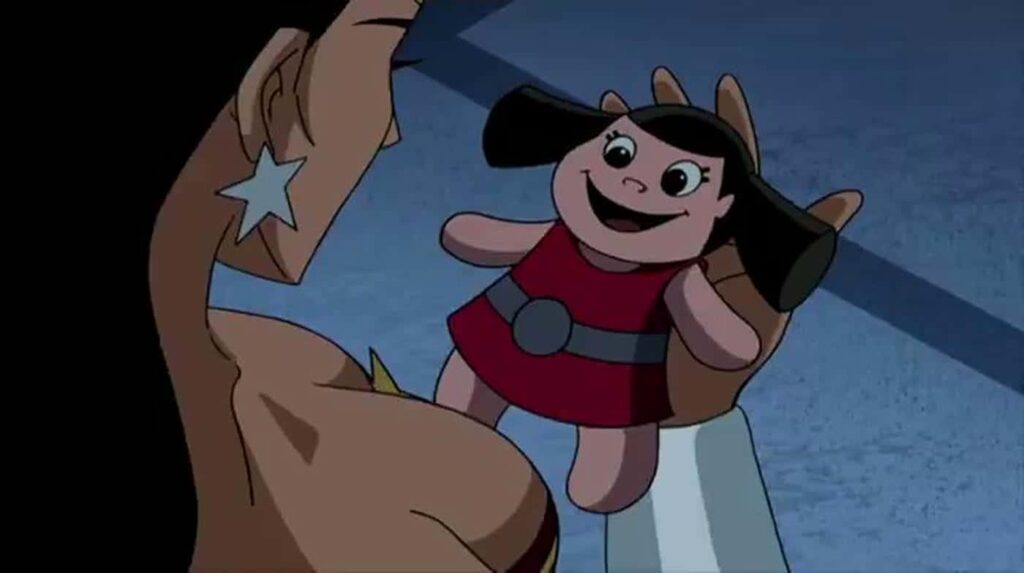

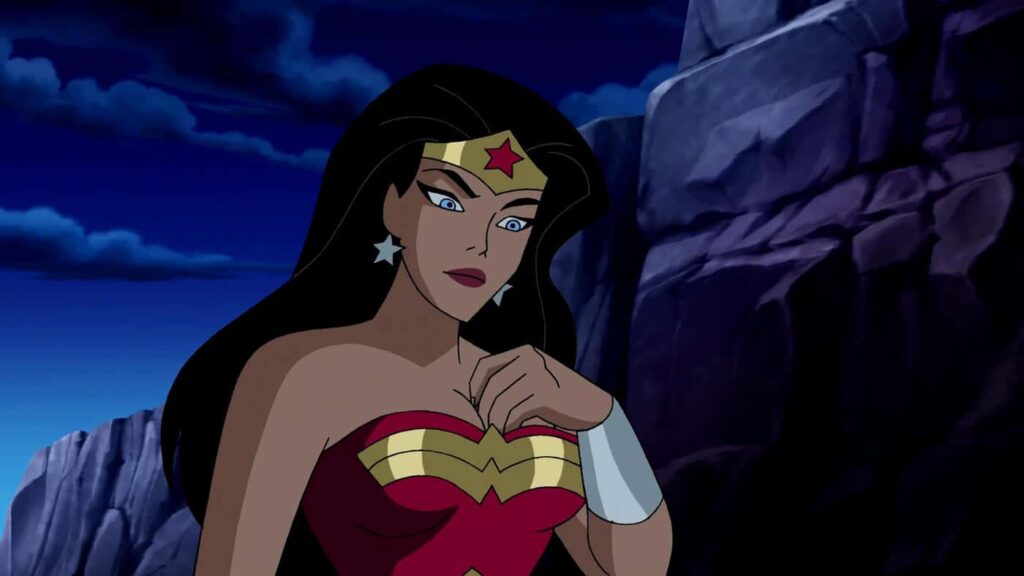
Justice League Unlimited episode “Dark Heart” (Season 1, Episode 10) during the League’s battle against a self-replicating nanotechnological invasion, Ray Palmer—the Atom—shrinks down so he can enter and disable the alien “heart.” Wonder Woman initially carries the miniature hero in her hand while fighting the robots alongside Batman and Superman.
As the fight intensifies, she tells him, “I need both hands, Professor Palmer,” and places the tiny Atom in the upper part of her armored bodice so she can fight with both fists. The animation briefly emphasizes where he has been placed, making the visual joke unmistakable while keeping the scene non-explicit.
Smallville
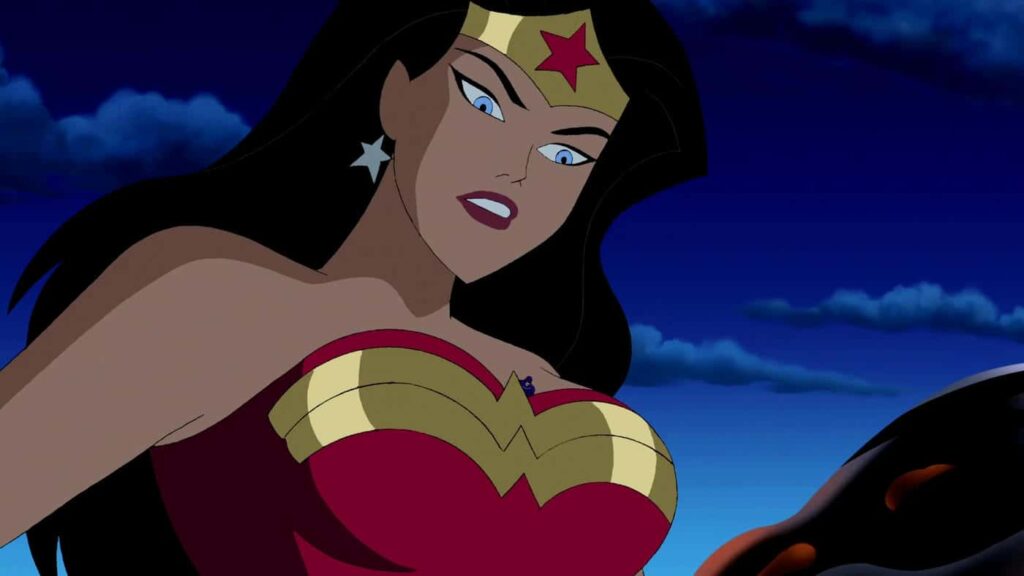
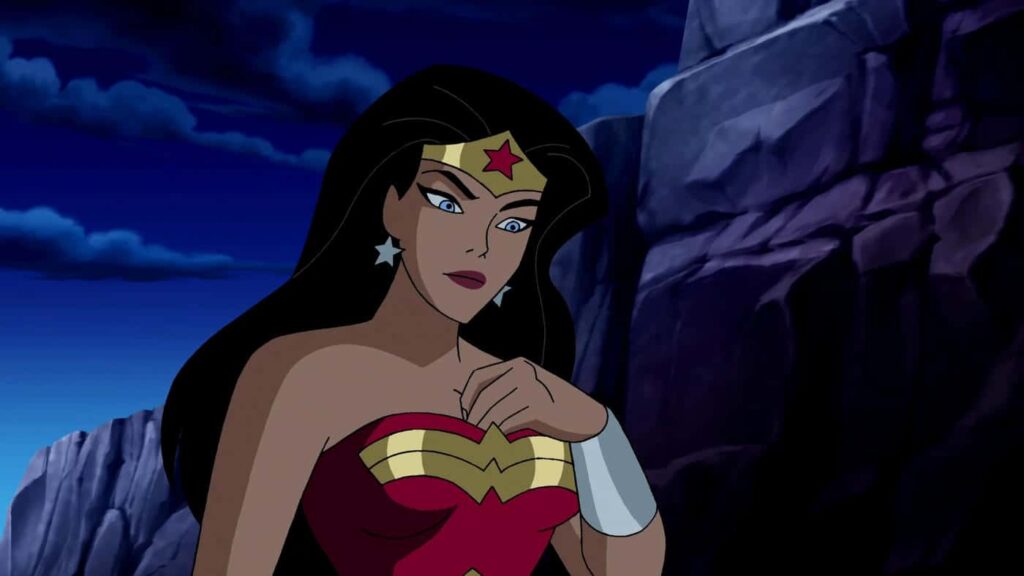
Lois Lane (Erica Durance) appears dressed as Wonder Woman.


The Big Bang Theory
Penny appears dressed as Wonder Woman.

Wonder Woman’s bustiest enemies
Cheetah
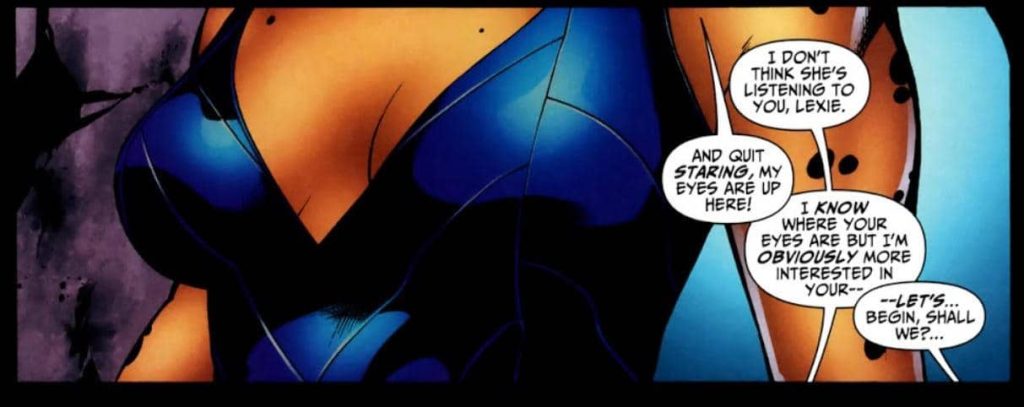
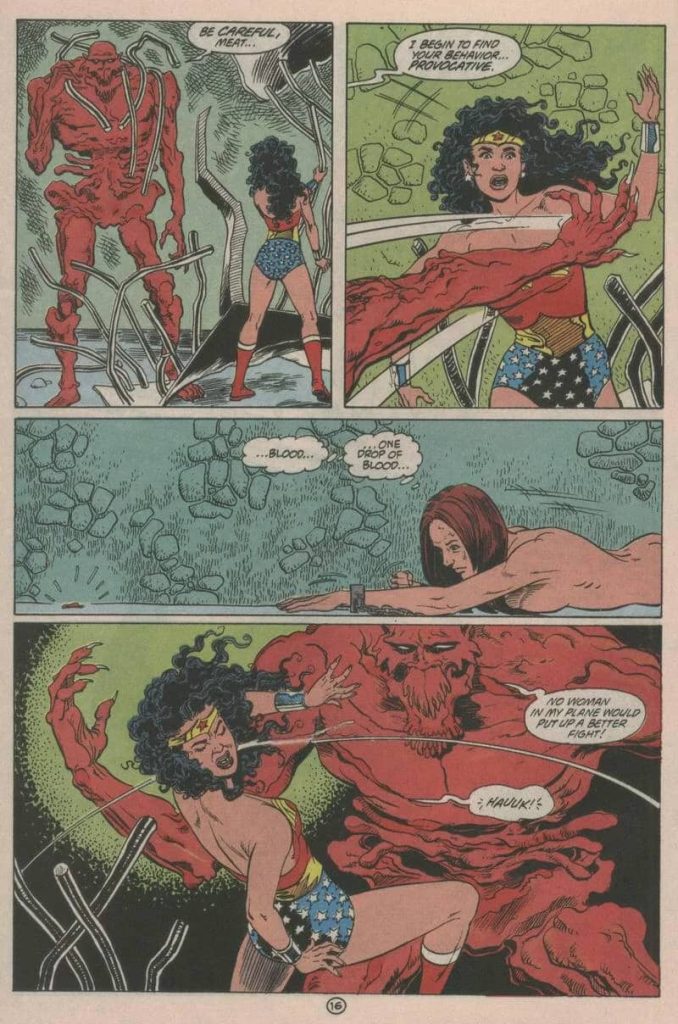
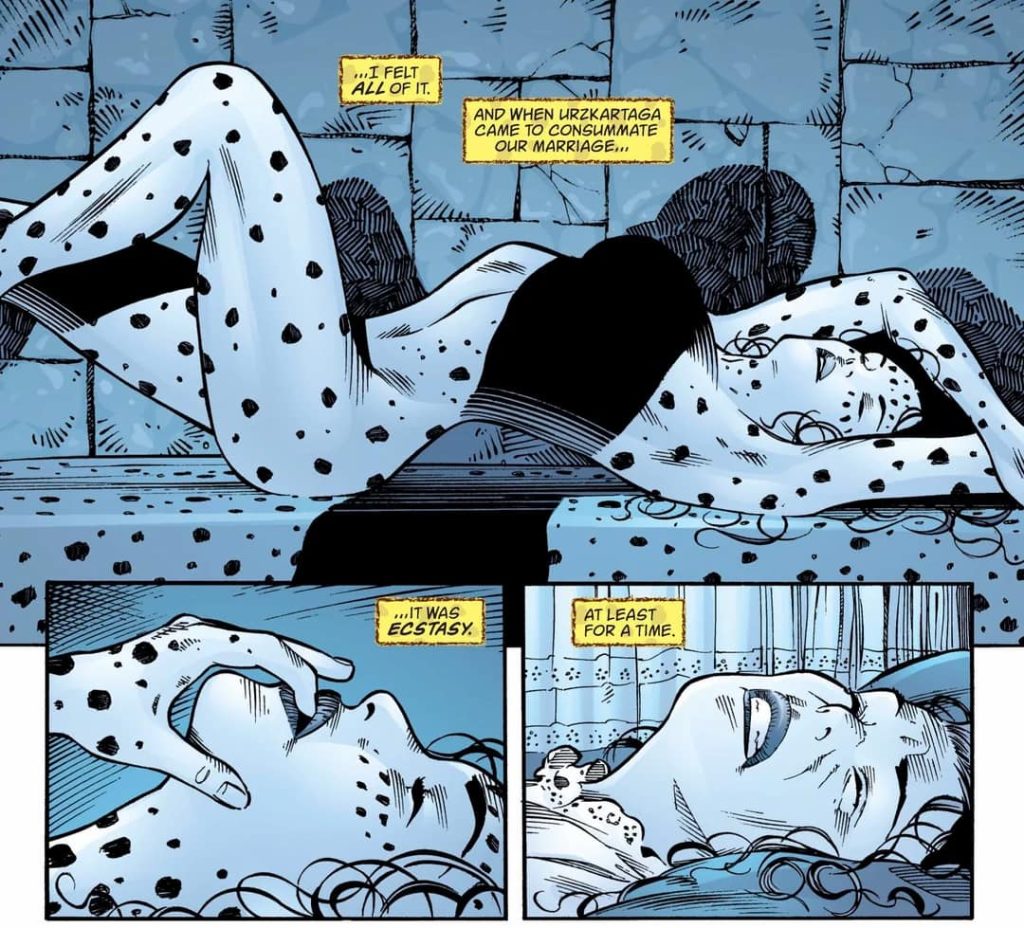
Cheetah is Wonder Woman’s best-known archenemy, with several women having used the identity, most famously Priscilla Rich and Barbara Ann Minerva. The modern Cheetah is usually portrayed as a feral, predatory figure: lean, muscular, clawed, and covered in spotted fur, with a physique designed to emphasize speed, agility, and animal menace rather than conventional glamour.


Circe
Circe is the immortal sorceress of Greek myth, reimagined by DC as one of Wonder Woman’s most dangerous magical foes. She specializes in transformation and illusion, and has at times claimed the role of Goddess of Magic. Artists often depict her as a mature, statuesque enchantress with flowing hair, elaborate robes or armor, and a commanding, classical beauty that reflects her divine ambition.


Giganta
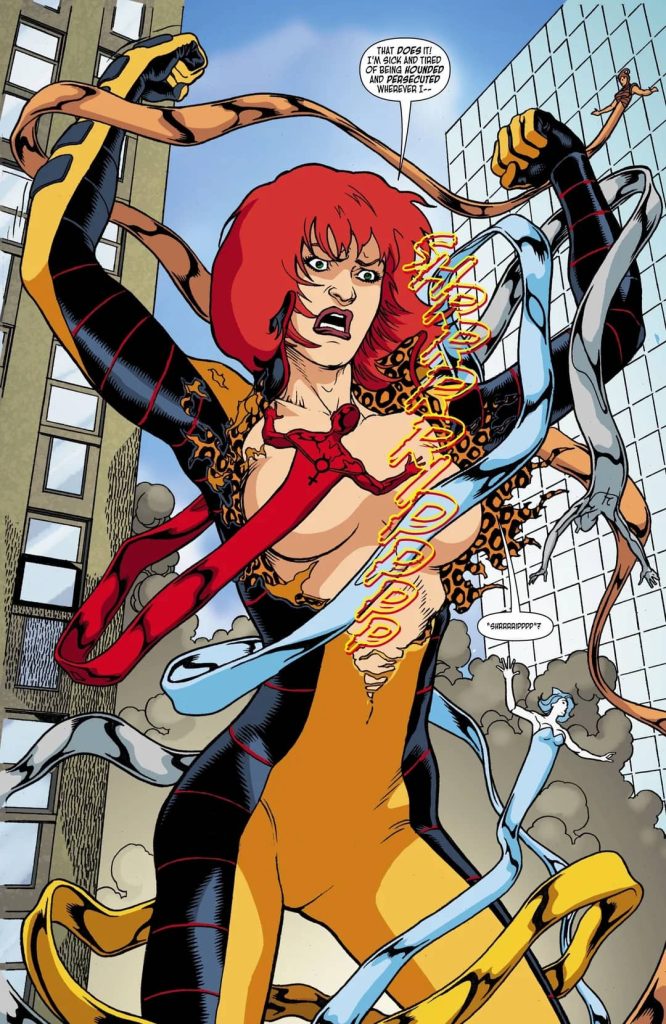
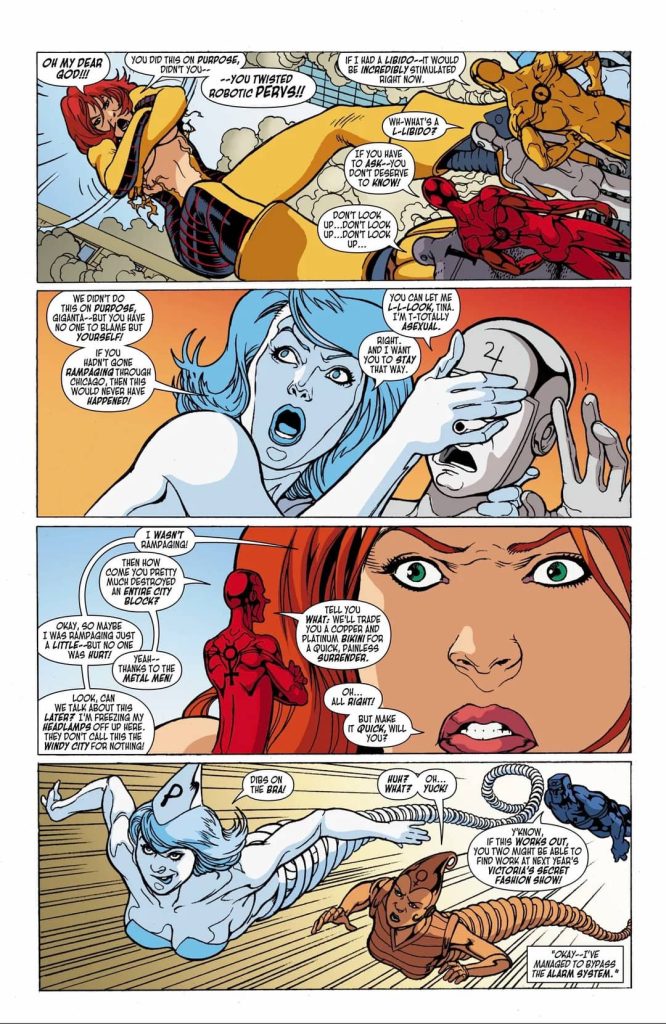
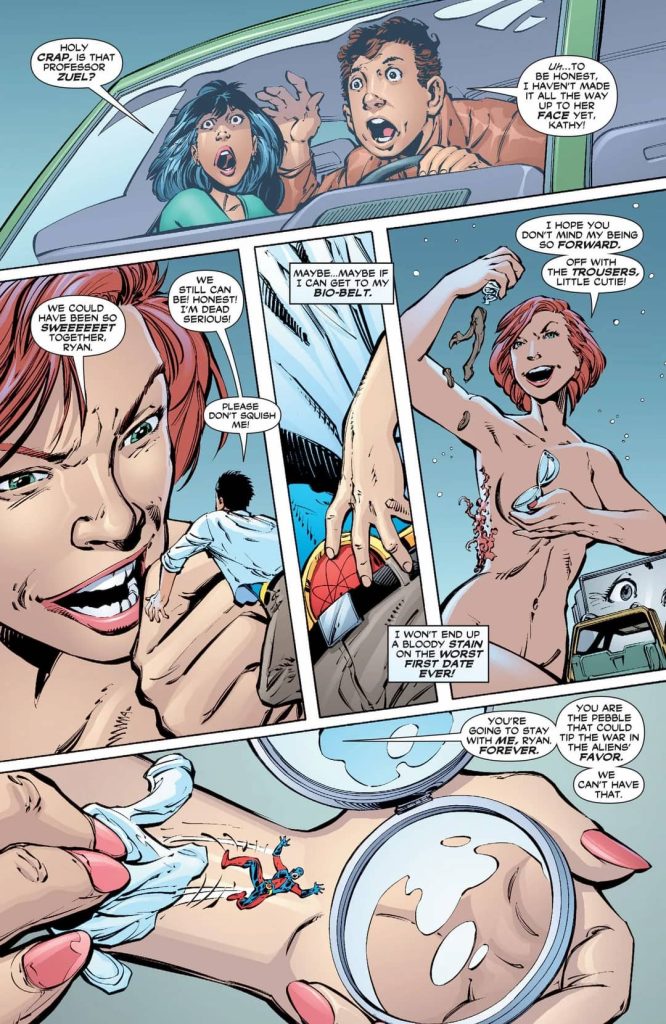
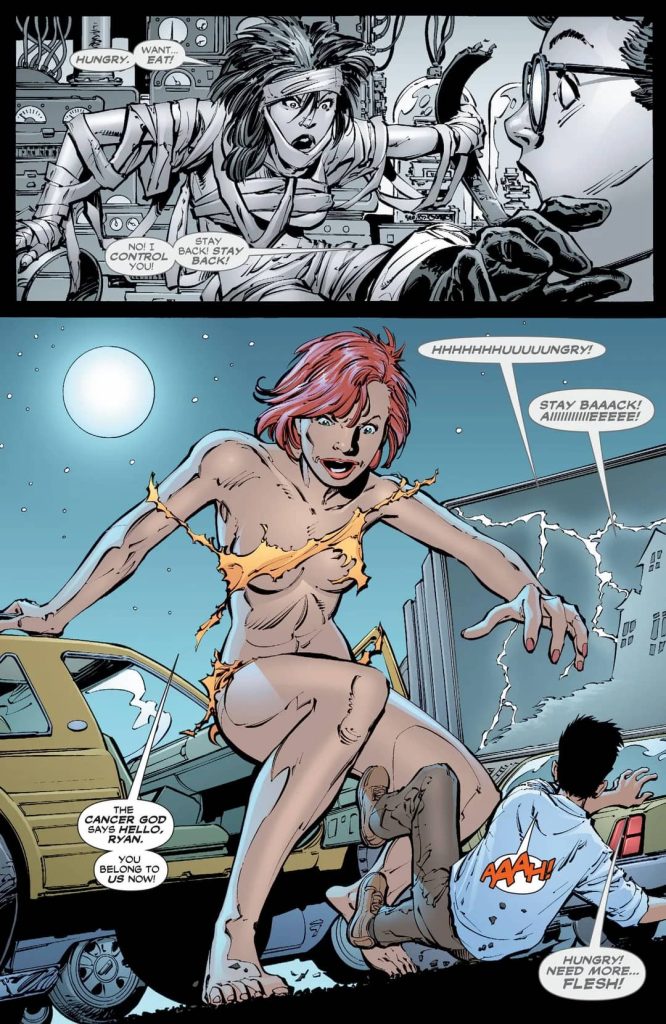
Giganta is Dr. Doris Zeul, a brilliant scientist who gained the power to grow to enormous size and alter her form. Her defining physical trait is scale: she can shift from human height into a towering giantess, making her one of the few Wonder Woman villains whose body is literally a weapon. In her normal form, she is often drawn as a tall, strong, red-haired woman with an athletic build.



Hera
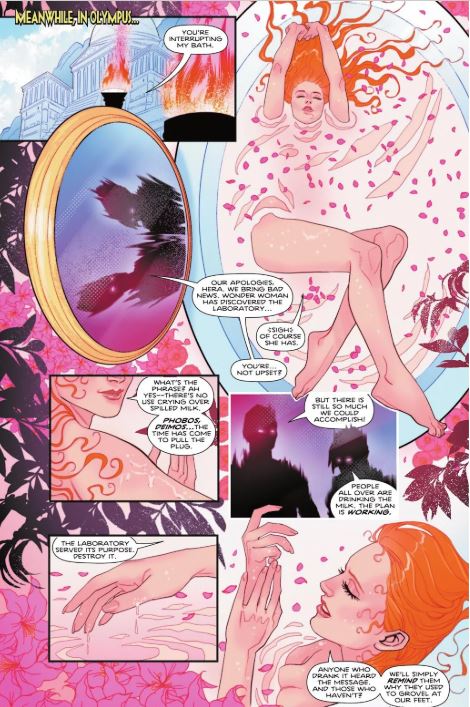
Hera is the queen of the Olympian gods and Zeus’s wife, adapted into DC mythology as a powerful, politically dangerous divine figure. Her visual depictions tend to stress regal authority rather than youthful glamour: she is usually shown as a mature, dignified woman in flowing classical garments, a crown or diadem, and an imposing, statuesque presence.


Medusa
Medusa is the Gorgon of Greek legend, reimagined in DC stories as a monstrous adversary with serpentine hair and a petrifying gaze. Her design is intentionally inhuman: scaled or green skin, snakes for hair, and a body that may be partly serpentine depending on the version. Rather than idealized beauty, her physicality conveys danger, curse, and transformation.

Silver Swan
Silver Swan first appeared in 1982 as Helen Alexandros, a ballet dancer who gained power and beauty through a pact connected to Ares; later versions include Vanessa Kapatelis, Diana’s friend, transformed into the character. She is typically drawn as an elegant, winged figure with a dancer’s poise and a sleek, athletic physique. Her costume and metallic wings make her one of Wonder Woman’s most visually graceful enemies.

Veronica Cale
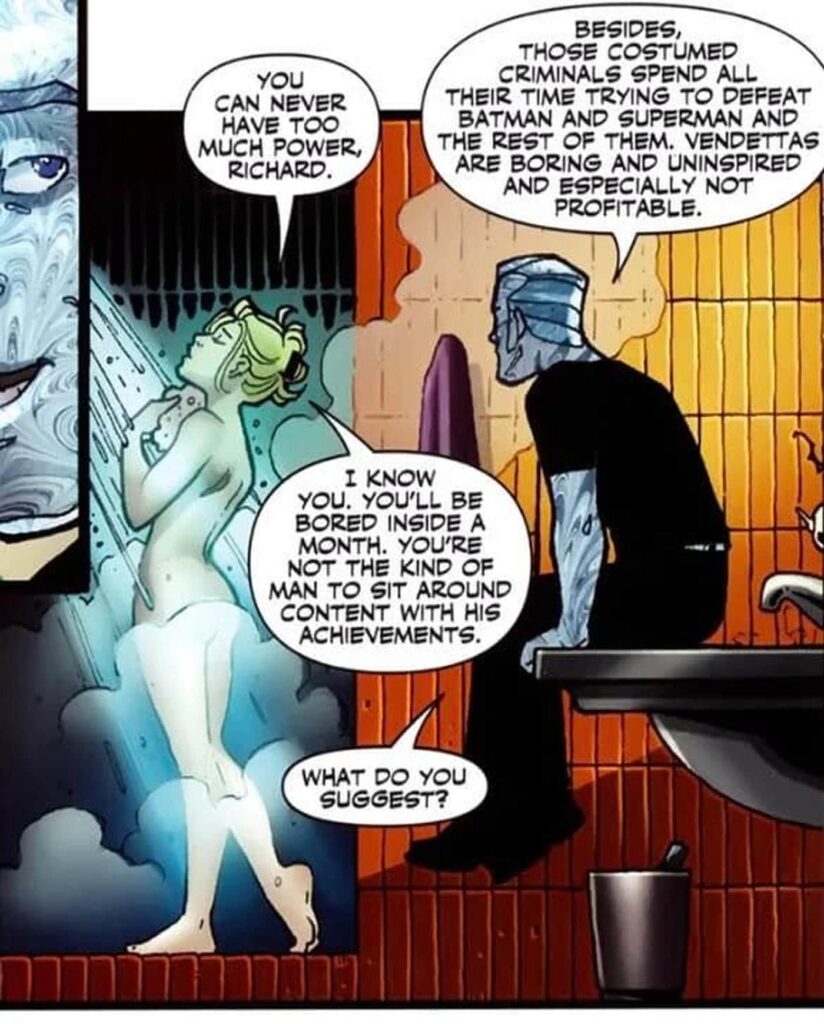
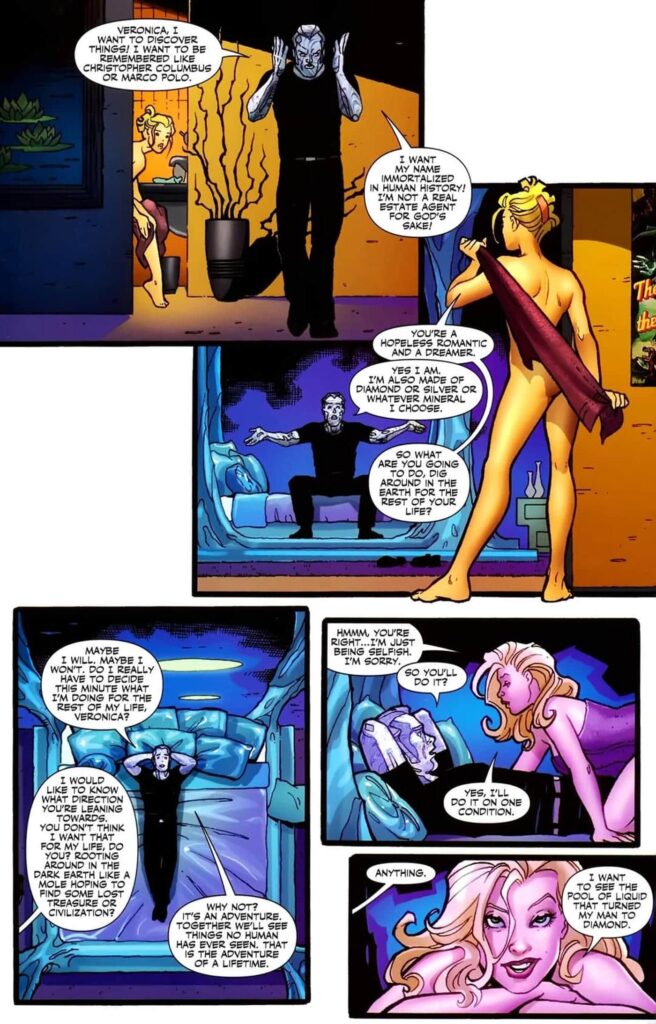
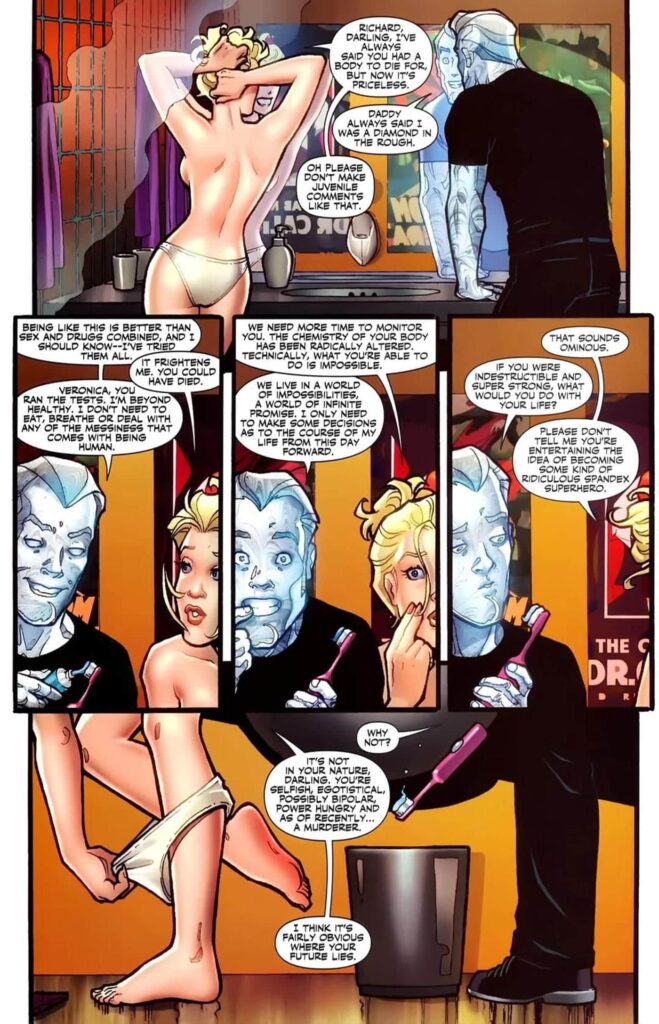
Veronica Cale is not a superpowered bombshell but Wonder Woman’s brilliant, ruthless billionaire counterpart—often described as the character’s Lex Luthor figure. DC identifies her as a bio-engineer, strategist, political influencer, and wealthy businesswoman. Her usual design is restrained and professional: tailored business attire, dark hair, and her signature pearls, projecting intelligence, control, and corporate menace rather than overt physical spectacle.
Laughing gas scenes with Wonder Woman

Informazioni sull'autore

Related posts:
 Tribute to Bulma | Most iconic sexy and tickling scenes
 Tribute to De Kiekeboes | Most Iconic Fanny Kiekeboe’s sensual and tickling scenes
 Tribute to Captain Harlock | Most iconic Kei Yuki’s sensual scenes
 Tribute to “Battle Angel: Alita” | Most iconic sensual and tickling scenes
 Tribute to Invisibile Woman | Most iconic Susan Storm’s sexy and tickling scenes
 Tribute to Romain Hugault | Most iconic sensual artworks and sexy comics
 Tribute to Black Canary | Most iconic sexy and tickling scenes
 Tribute to Jonathan Steele | Most iconic sensual and tickling scenes
 Tribute to Legs Weaver | Most iconic sensual and tickling scenes
 Tribute to Morgan Lost | Most iconic sensual scenes
 Tribute to Watchmen | Most iconic sexy and tickling scenes
 Tribute to “Y: The Last Man” | Most iconic sexy scenes


