
Jean Grey is not merely one of the founding members of the X-Men; she is the emotional anchor, the ultimate telepath, and one of the most powerful beings in the entire Marvel Universe. Created by Stan Lee and Jack Kirby in 1963 for The X-Men #1, Jean began her journey as Marvel Girl, the sole female member of Professor Charles Xavier’s original team. Over the decades, she evolved from a restrained telekinetic hero into an omnipotent cosmic entity, symbolizing rebirth, sacrifice, and the duality of human nature.
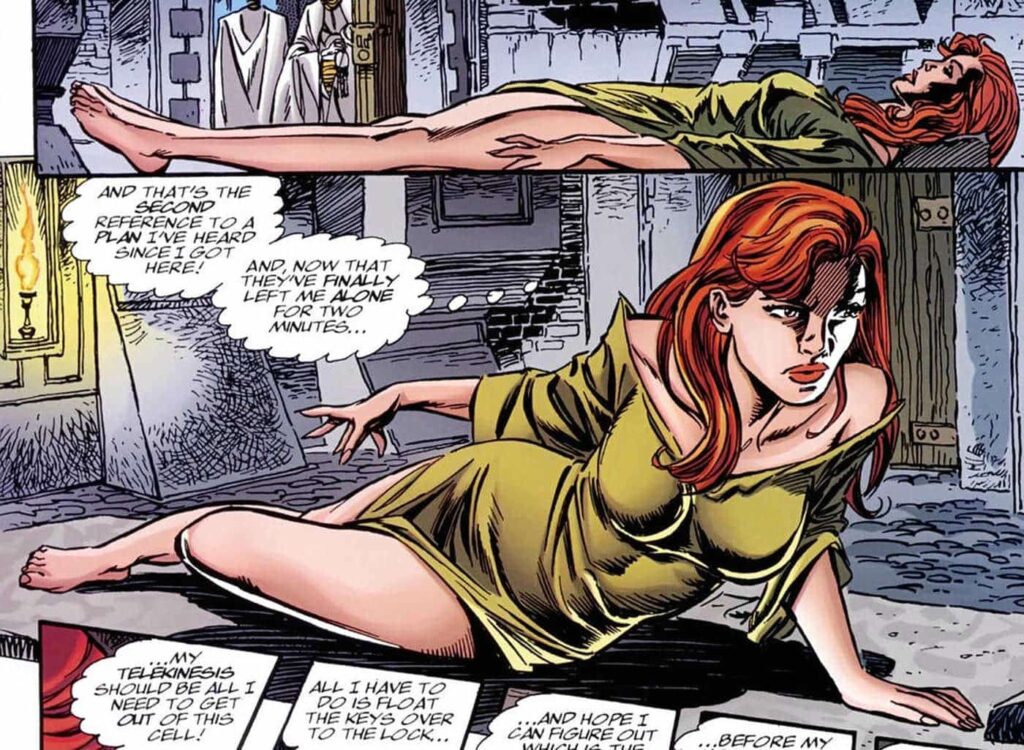
Initially presented as a compassionate and deeply empathetic hero, Jean’s dual abilities of telepathy and telekinesis quickly established her as a formidable force on the battlefield and a natural leader. Within the X-Men narrative, she serves as the moral center of the group. Her emotional dynamic with her long-time love interest, Cyclops (Scott Summers), paired with her intense, unfulfilled connection with Wolverine (Logan), forms one of the most famous and enduring romantic triangles in comic book history,

Jean’s defining storyline arrived in the late 1970s and early 1980s through the creative vision of writer Chris Claremont and artist John Byrne in The Dark Phoenix Saga. While saving her teammates from a deadly cosmic radiation storm, Jean bonded with the Phoenix Force, an ancient, immortal entity embodying passion, creation, and destruction.

This cosmic elevation eventually turned tragic. Corrupted by her boundless new abilities and manipulated by the Hellfire Club, Jean transformed into the Dark Phoenix, consuming a star and inadvertently destroying an inhabited alien world.
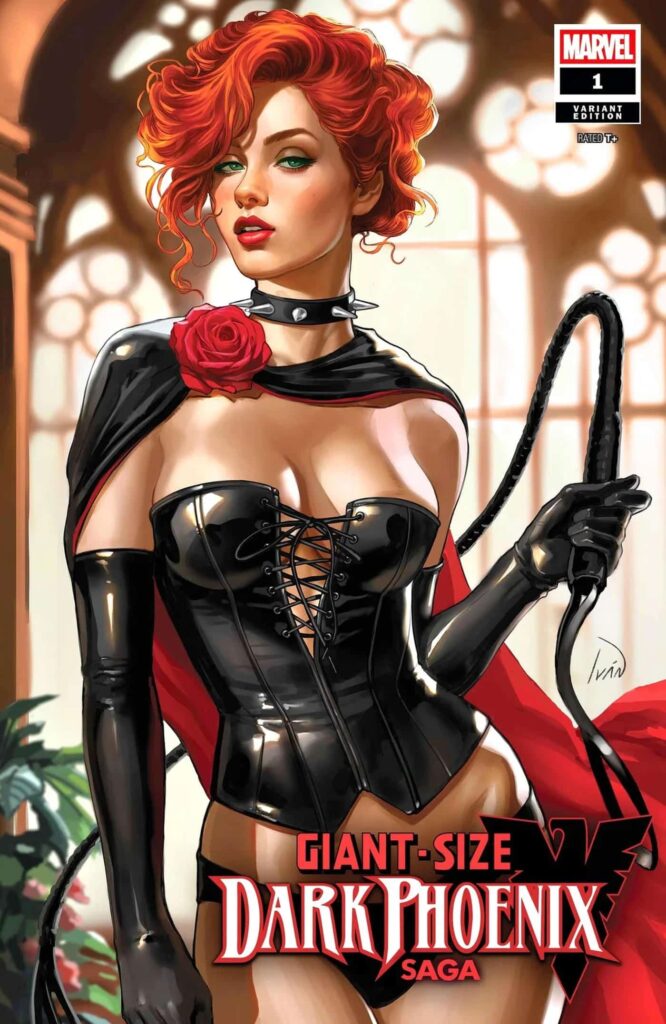
To save the universe from her own untamed power, Jean ultimately chose to sacrifice her life, establishing her status as a tragic superhero icon. Later retcons clarified the distinct relationship between Jean and the cosmic entity, yet her intrinsic bond with the Phoenix remains unmatched in Marvel lore.

Sexy scenes with Jean Grey
Jean Grey’s visual portrayals have consistently reflected shifting cultural perspectives on female superheroes across eras. In her early 1960s Marvel Girl days, she wore a standard green-and-yellow minidress designed to convey youth and modesty. By the late 1970s, artist Dave Cockrum redesigned her appearance for the Phoenix arc, introducing the sleek green-and-gold suit with thigh-high boots and a stylized chest emblem, a design that visually projected fiery majesty and deity-like power. In the 1990s, Jim Lee revamped her look with blue-and-orange armor, popularized by X-Men: The Animated Series, which emphasized an athletic, combat-ready aesthetic.
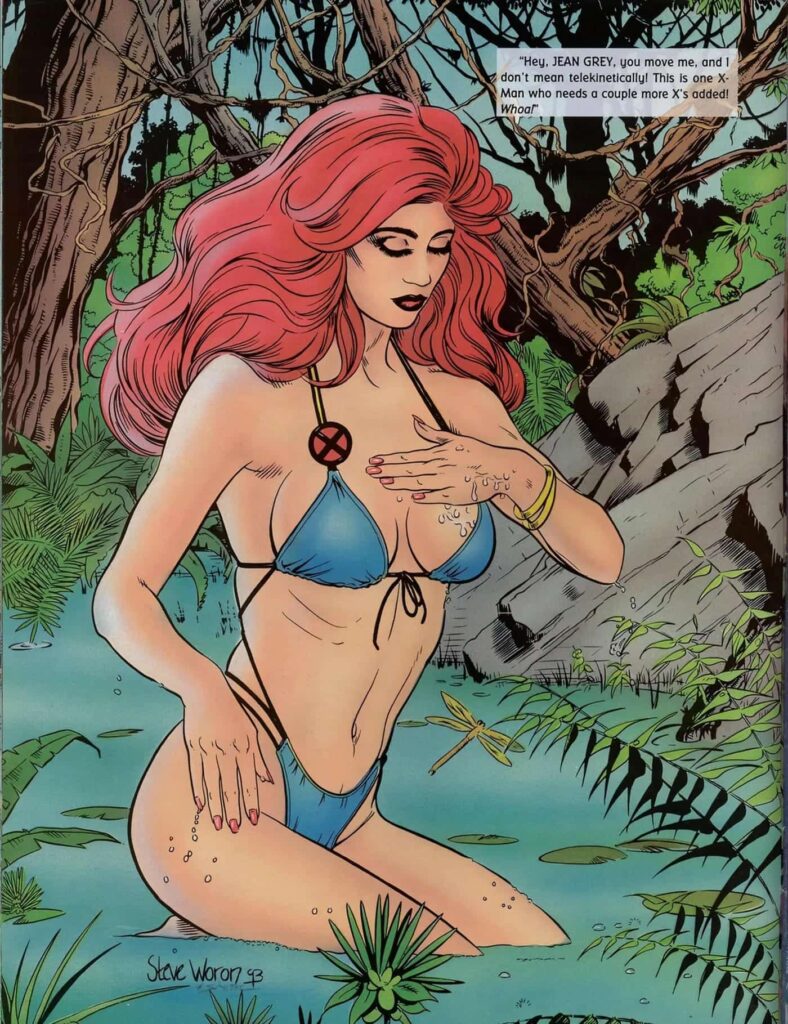
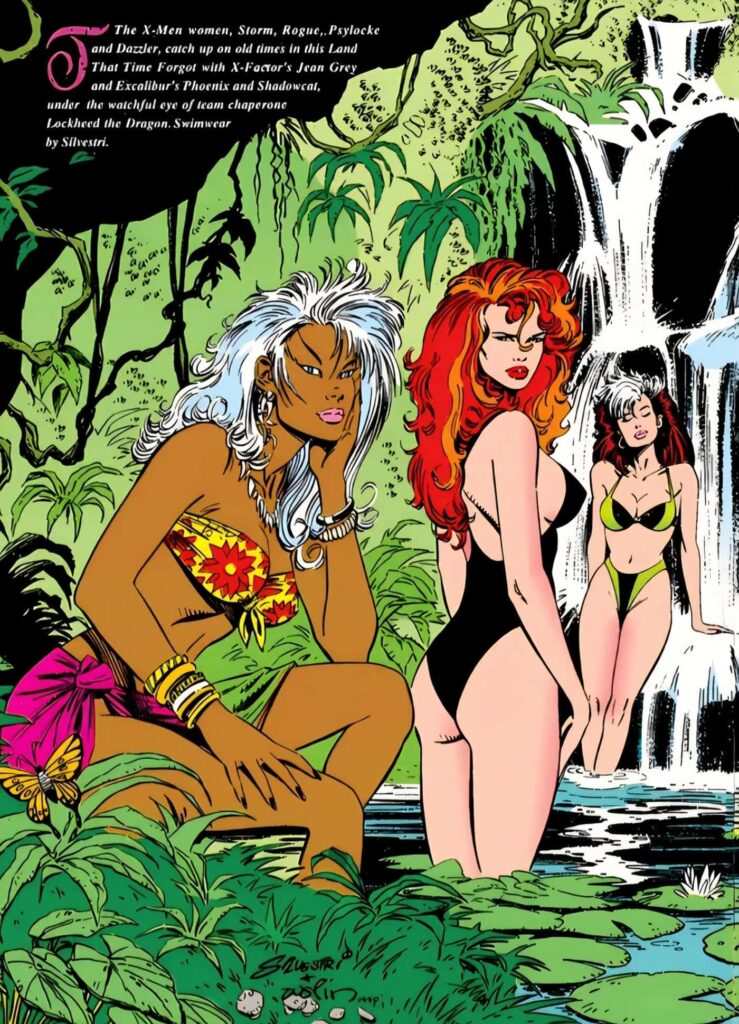
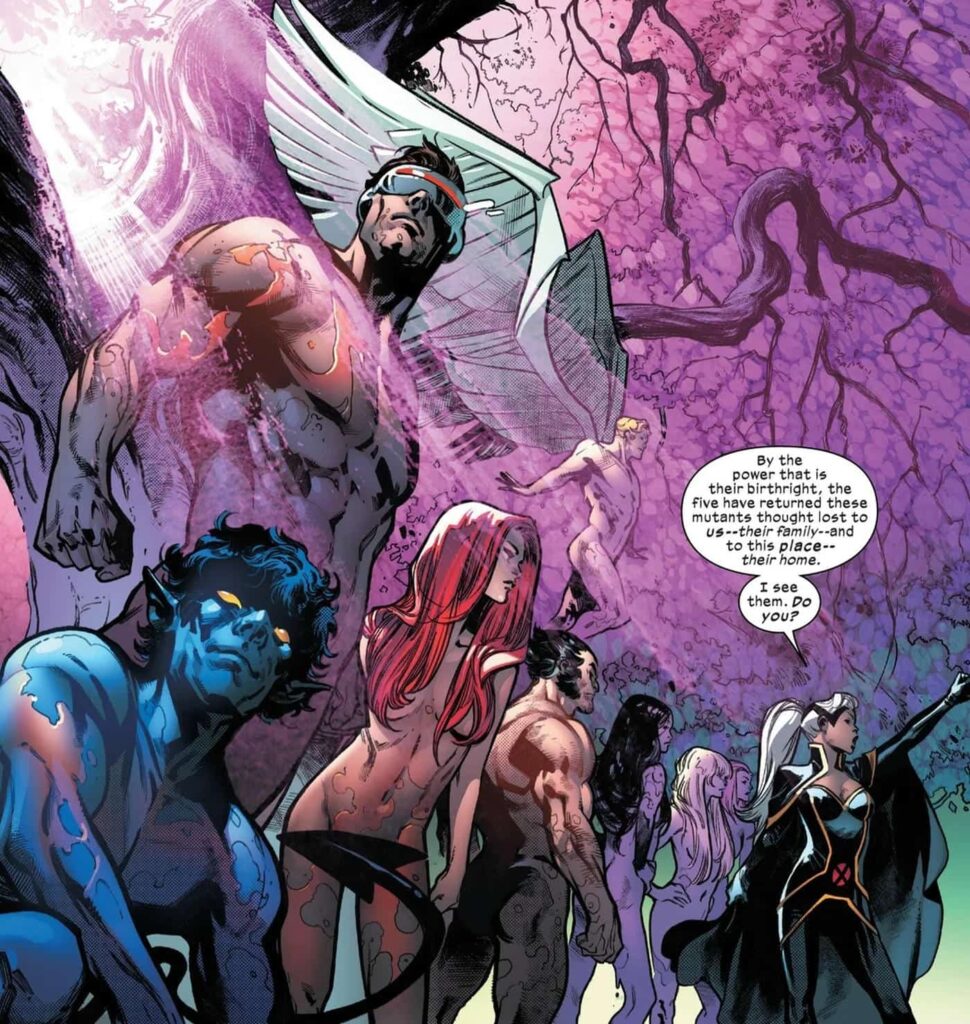
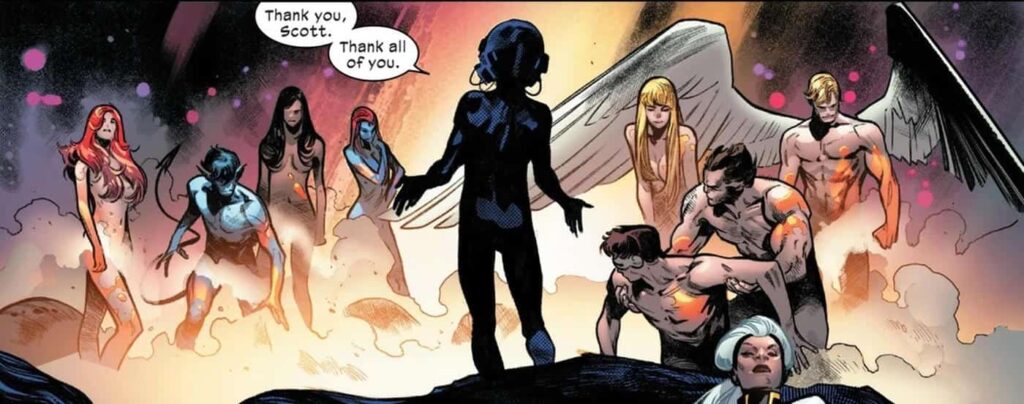
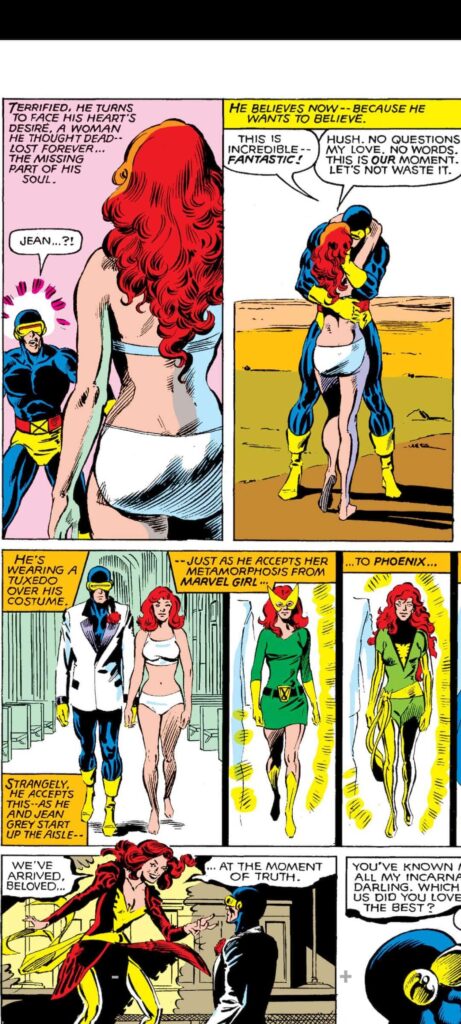
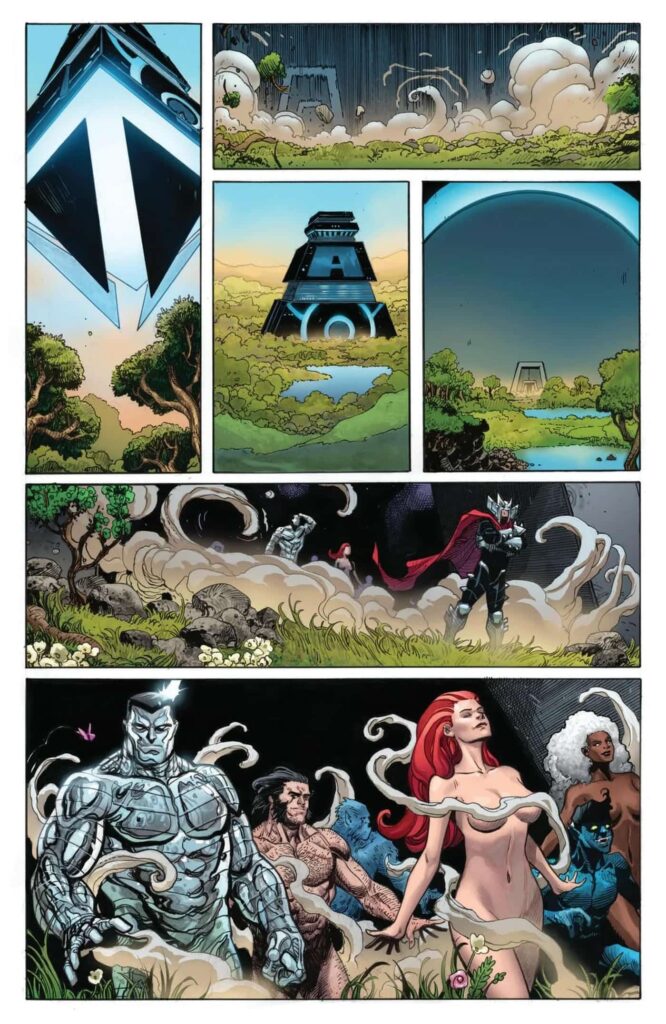


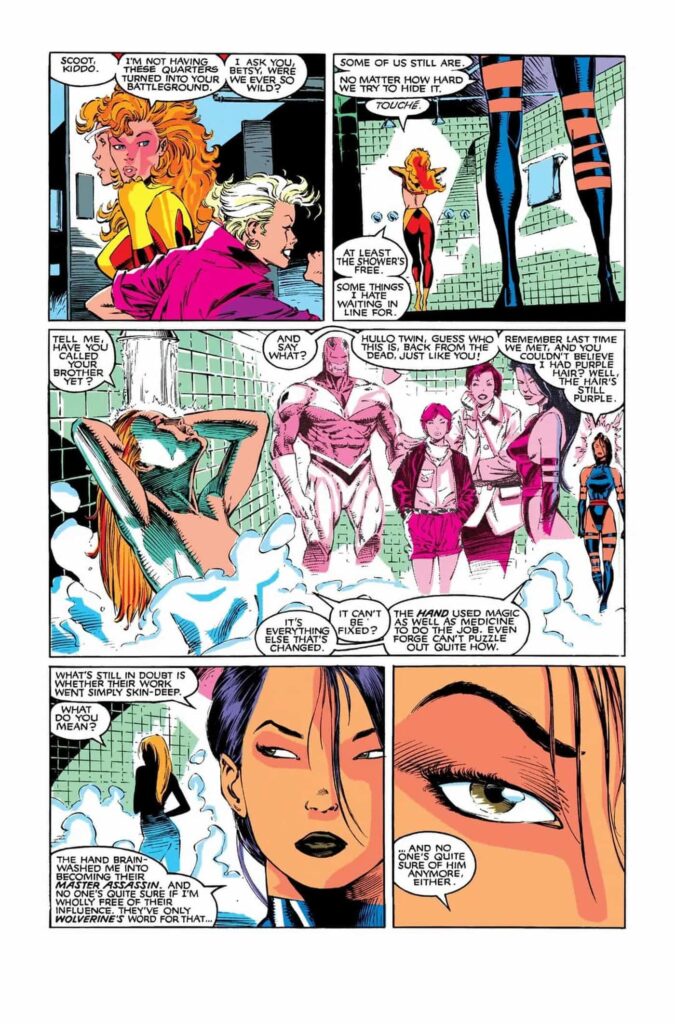
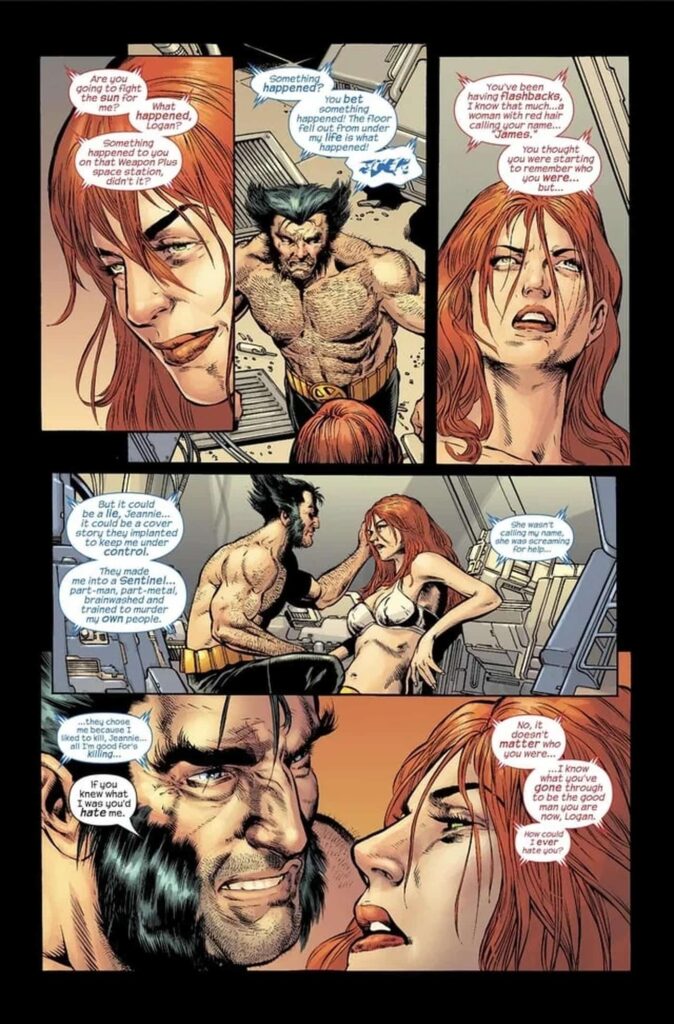
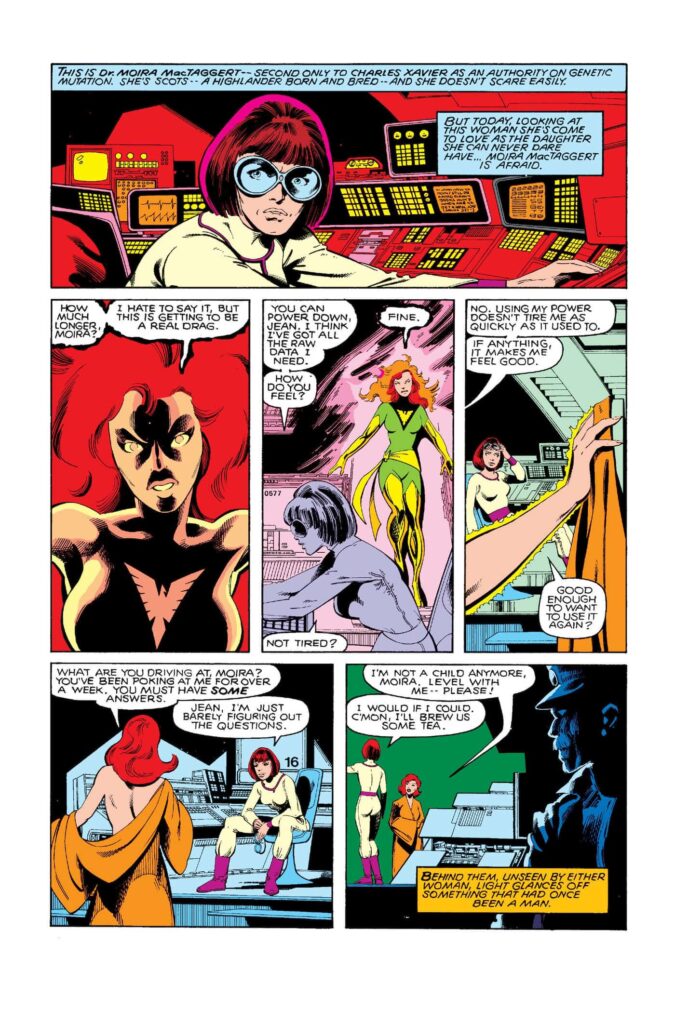
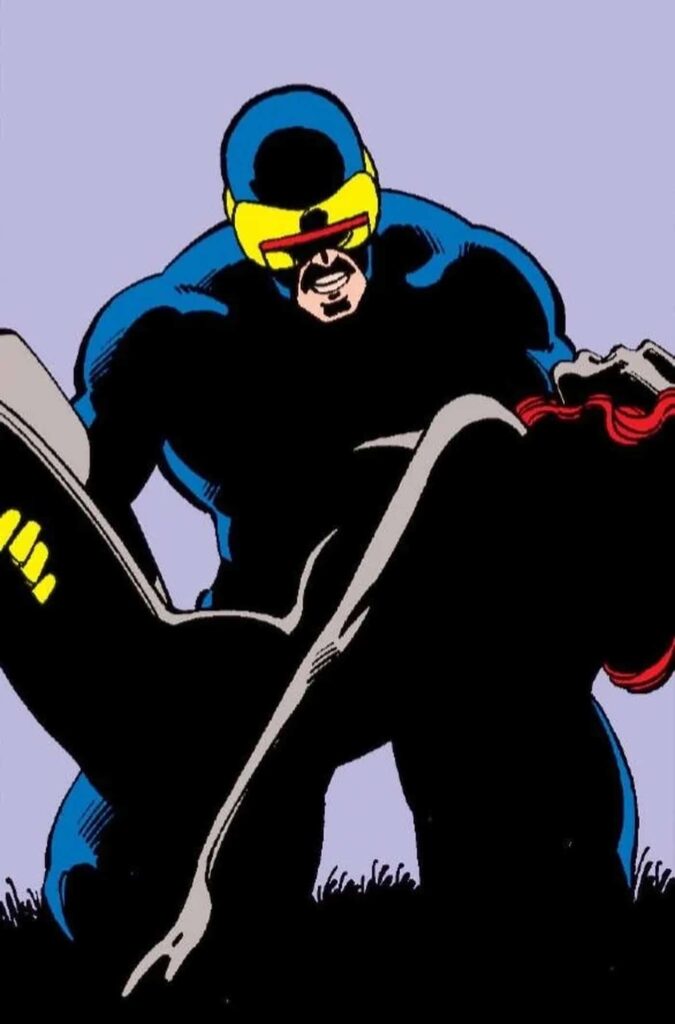
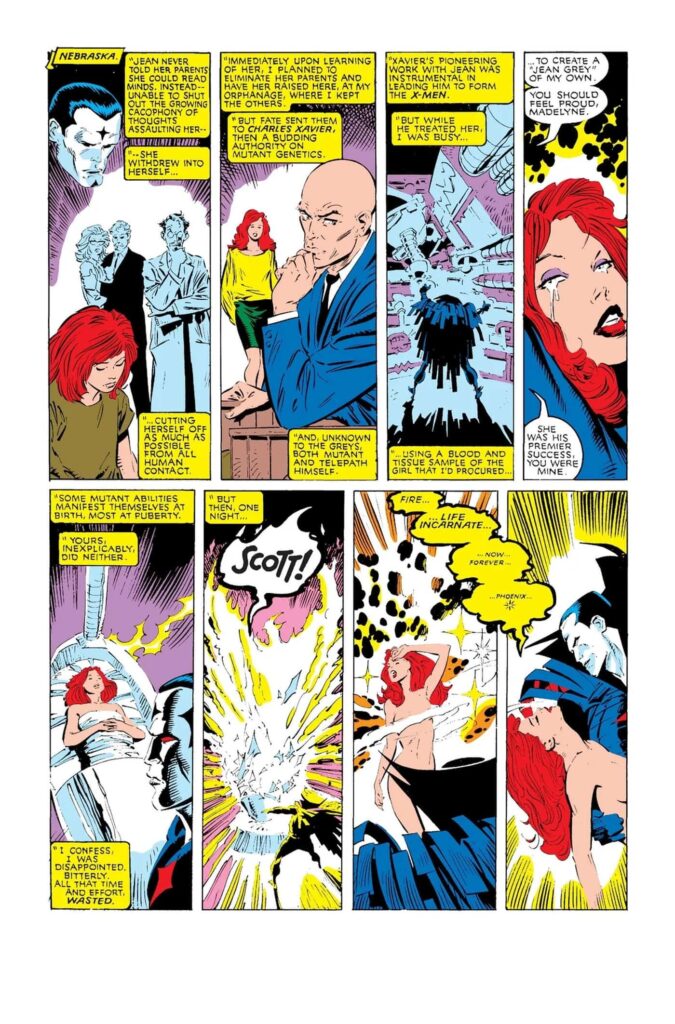
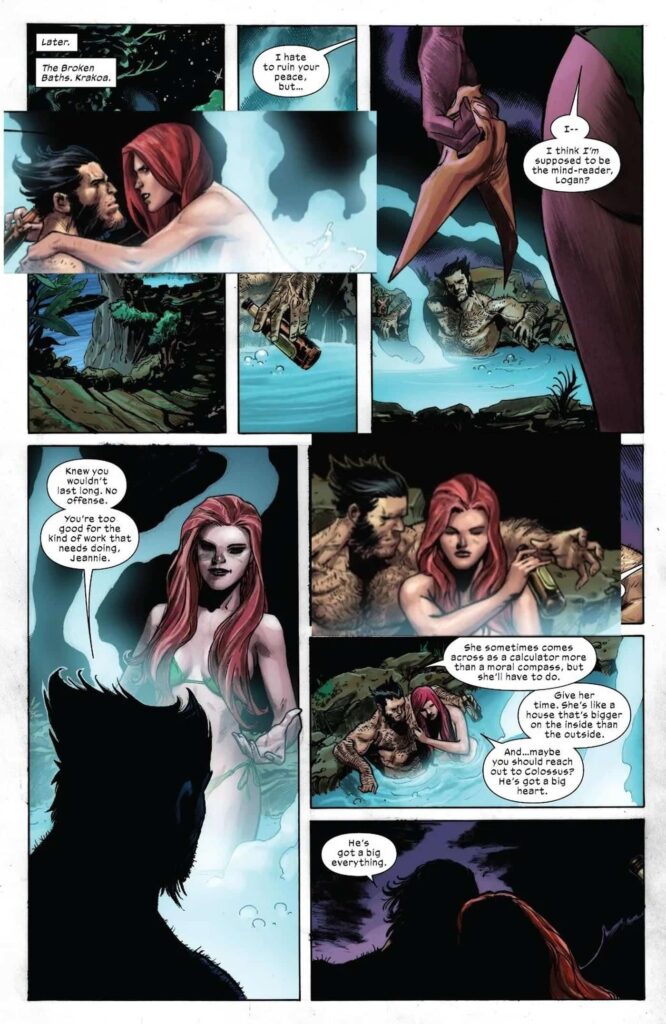
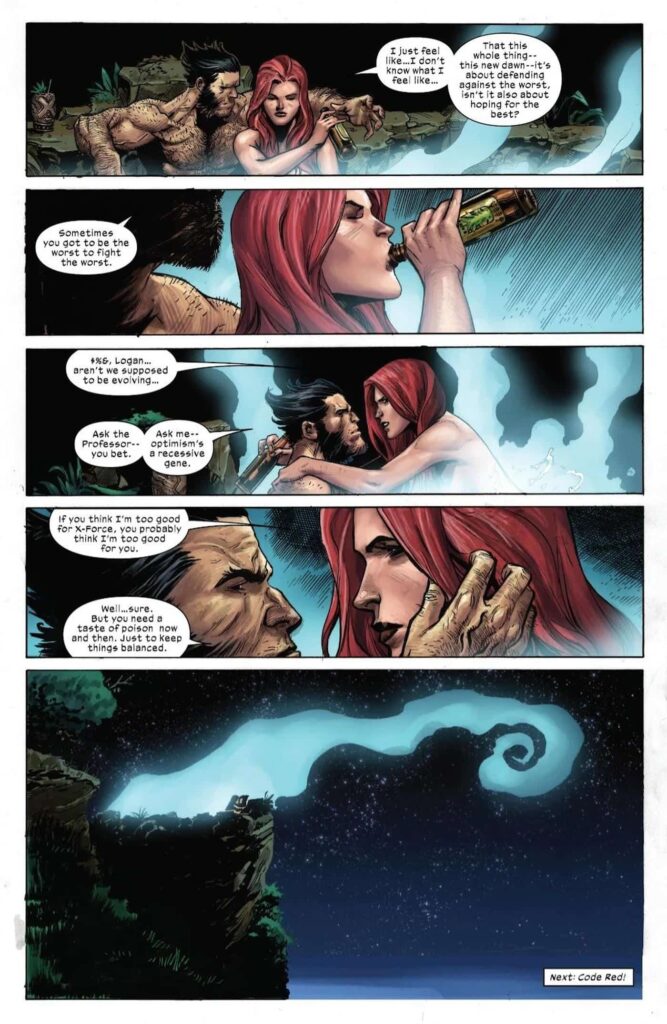
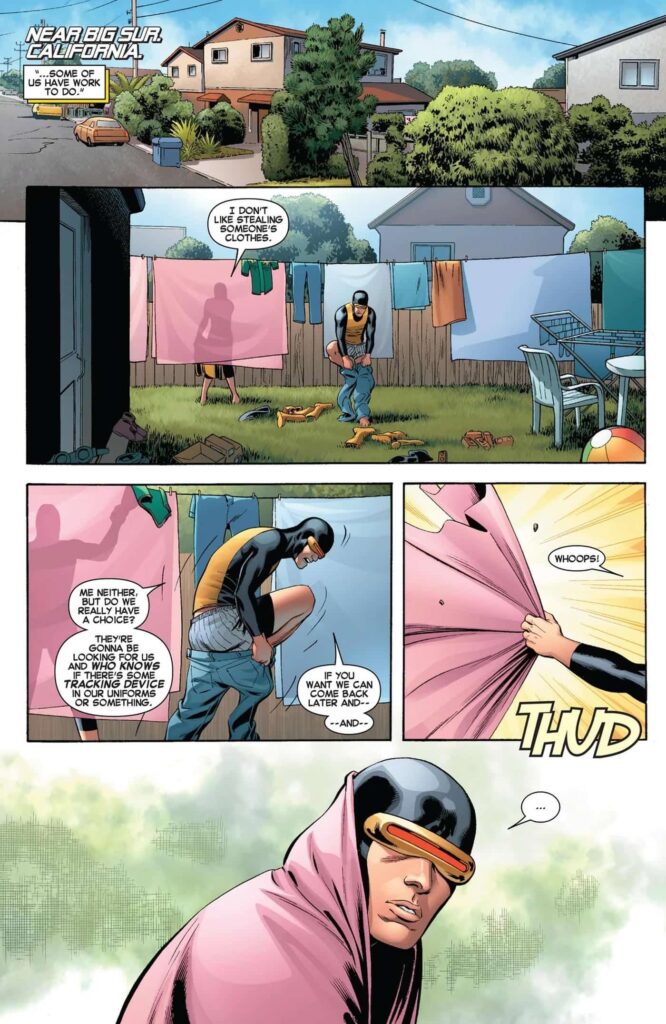
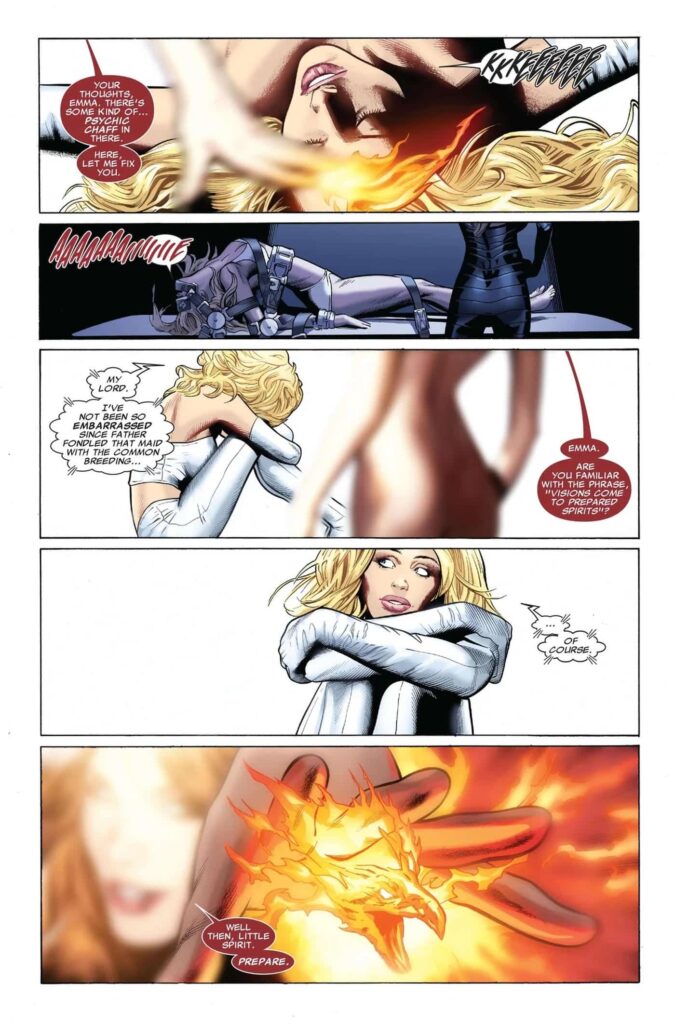
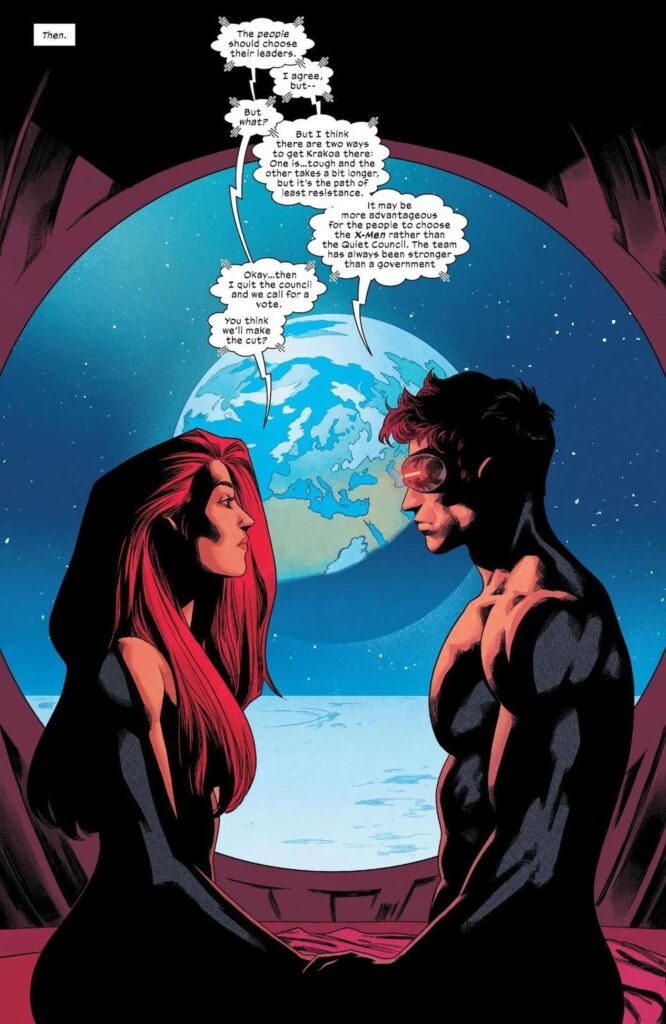
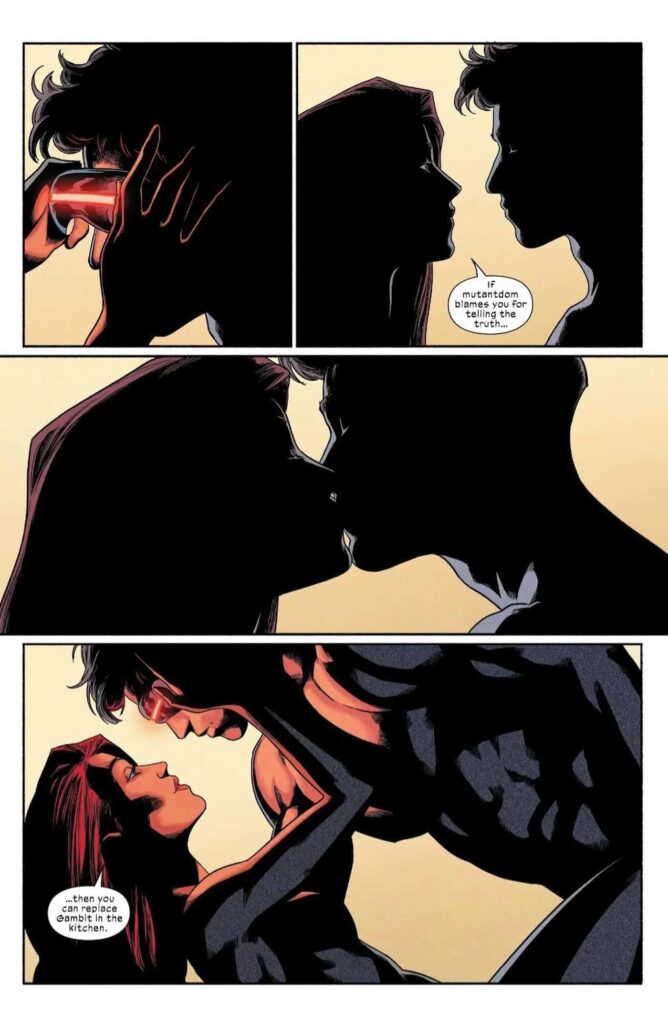
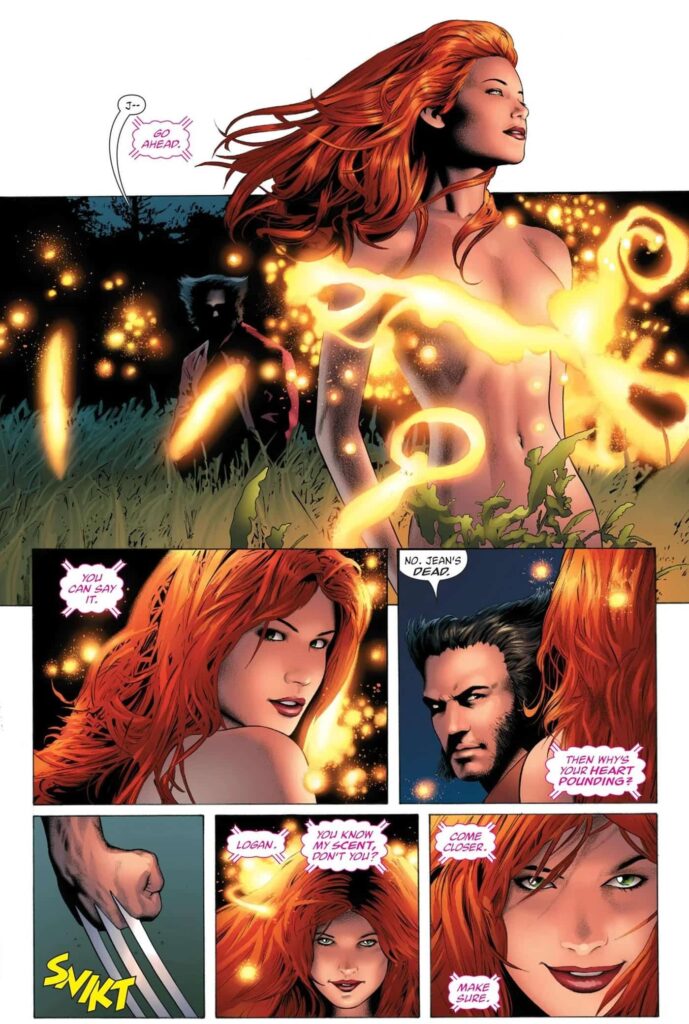
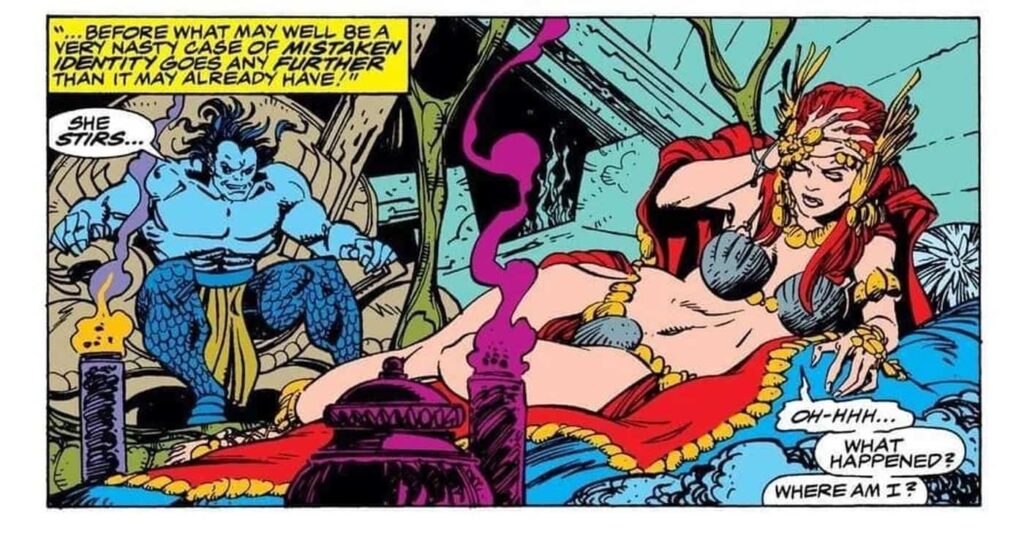
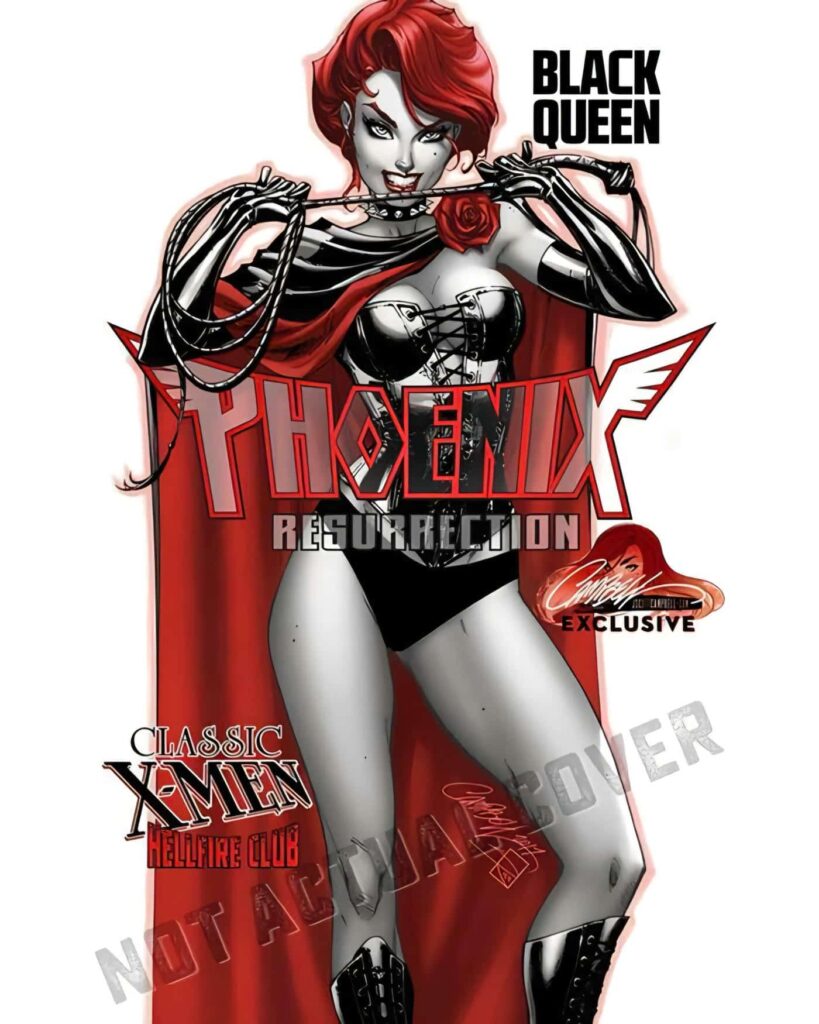
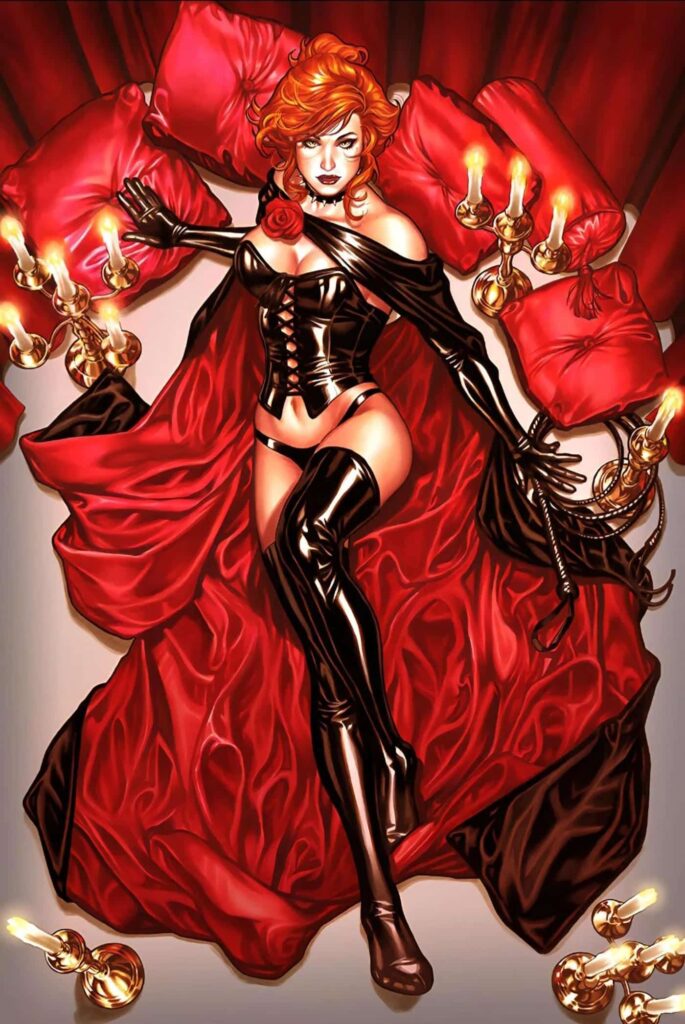
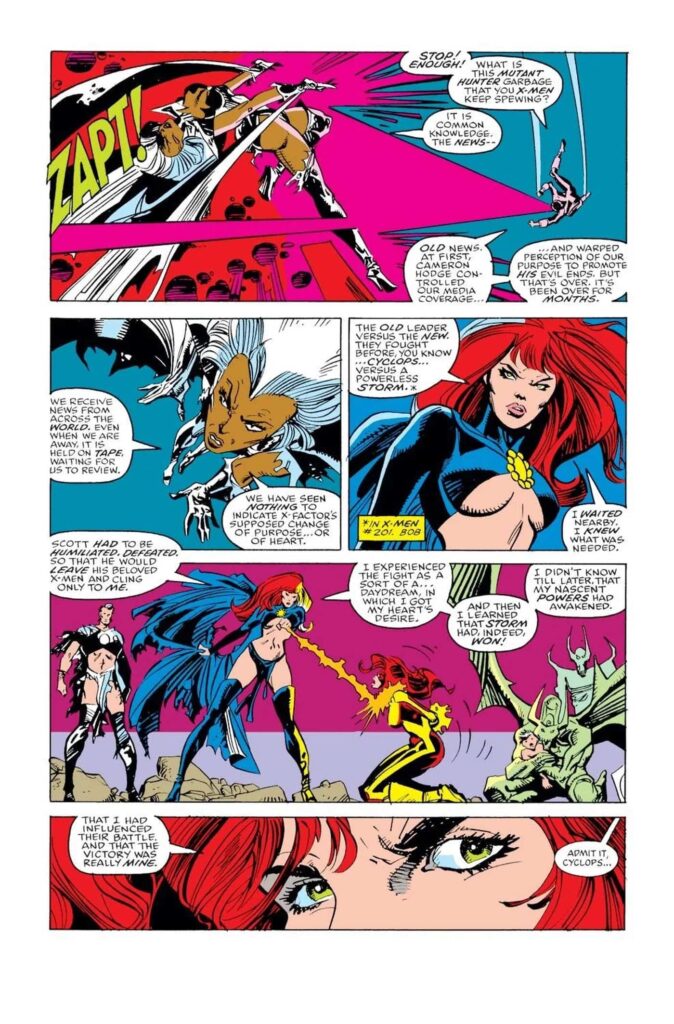
Throughout Marvel canon, Jean is portrayed as a striking beauty defined by her iconic long red hair and green eyes. Her sensuality became a central narrative element during The Dark Phoenix Saga. Under the telepathic illusion of Mastermind, Jean embraced a dark, sensually explicit persona as the Black Queen of the Hellfire Club. Clad in a Victorian-inspired corset, thigh-high leather boots, and dark makeup, this transformation visually represented the unleashing of her repressed desires and unrestricted cosmic power. Modern comic creators approach Jean’s femininity not merely as a romantic visual cue, but as a expression of her deep emotional intelligence, formidable strength, and unbridled passion.
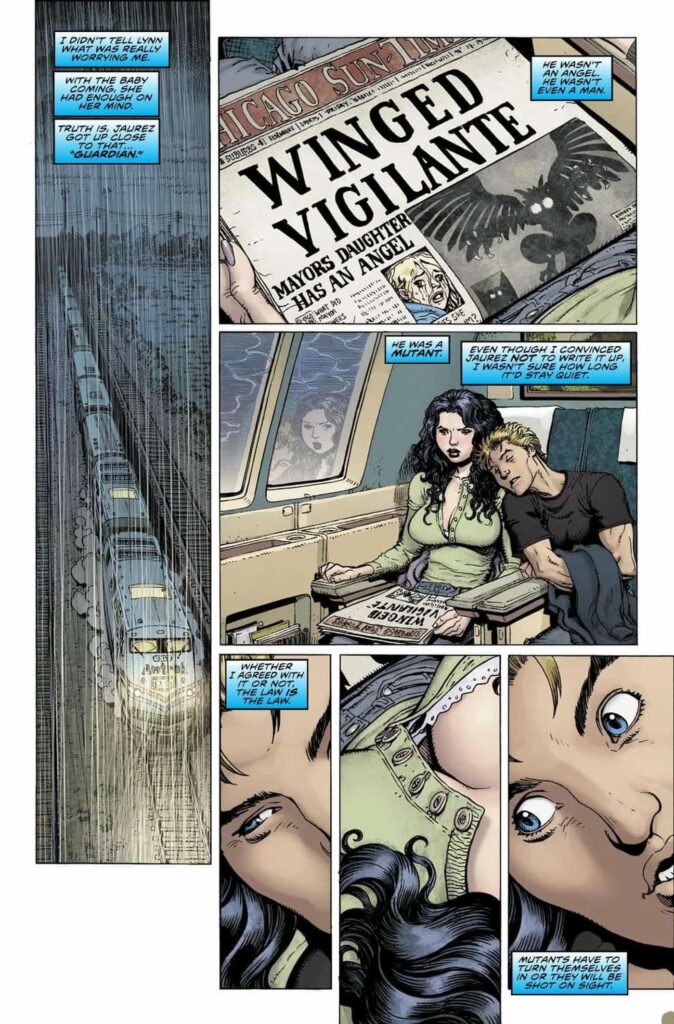
Sexy scenes with Ultimate Jean Grey
Sexy Jean Grey in movies
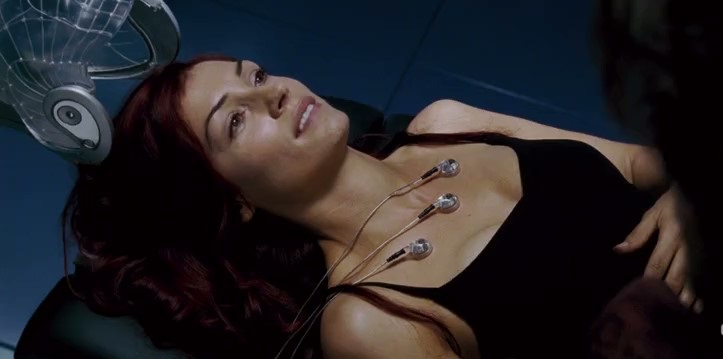
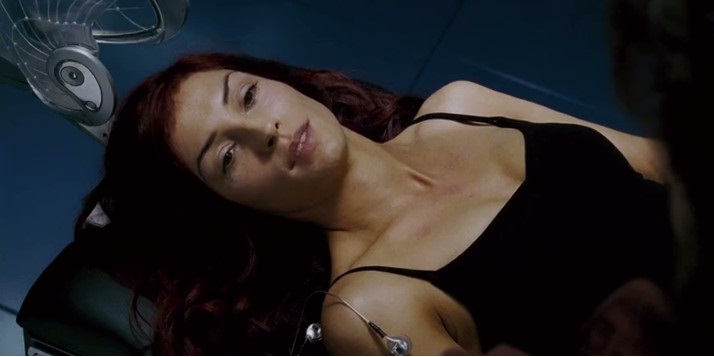
In “X-Men: The Last Stand” (2006), Jean Grey—in her Phoenix form—tries to seduce Wolverine and have sex with him. Logan stares at her chest as she removes the electrodes from her and says that it makes her blush.





Sexy scenes with Madelyne Pryor
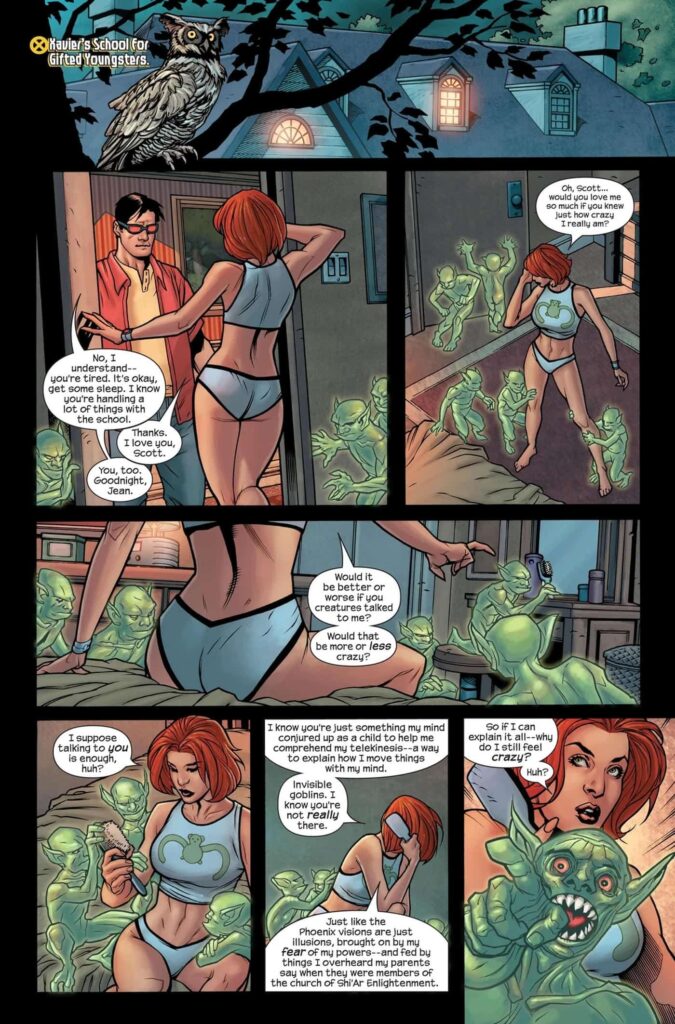
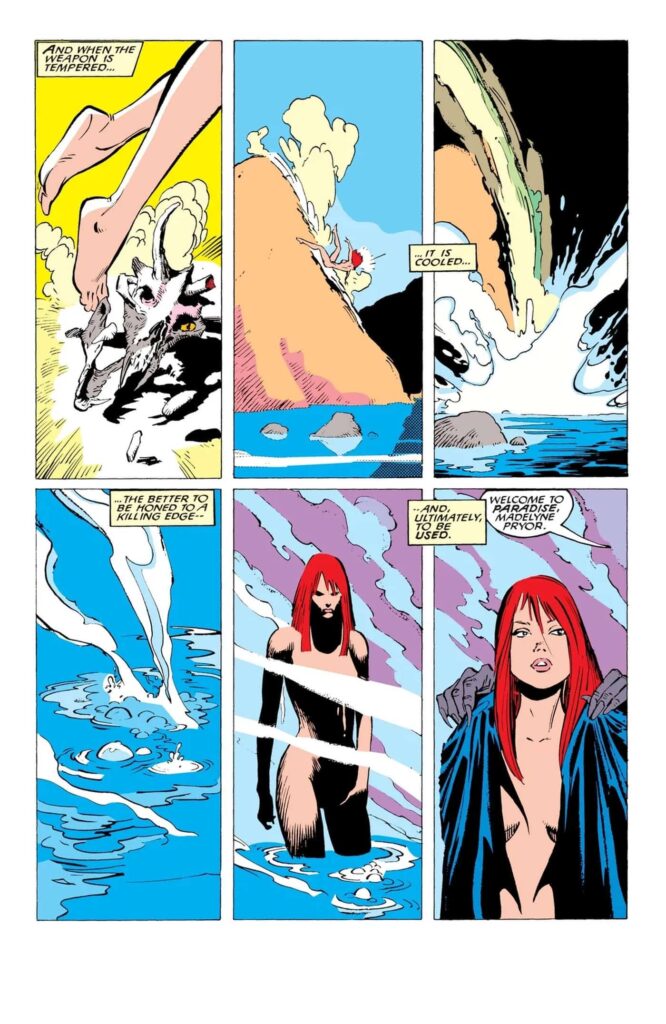
Following Jean’s apparent death, Chris Claremont introduced Madelyne Pryor, a woman physically identical to Jean. Scott Summers eventually married Madelyne, and together they had a son, Nathan Summers, who would grow up to become the time-traveling mutant Cable.
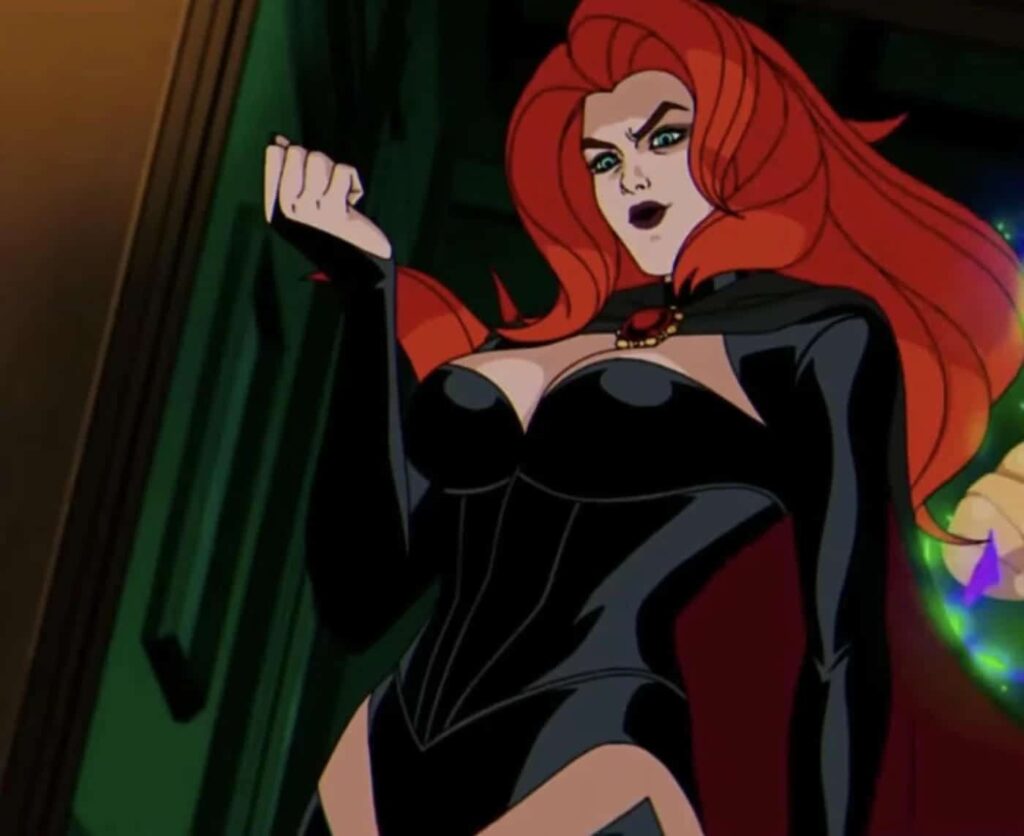
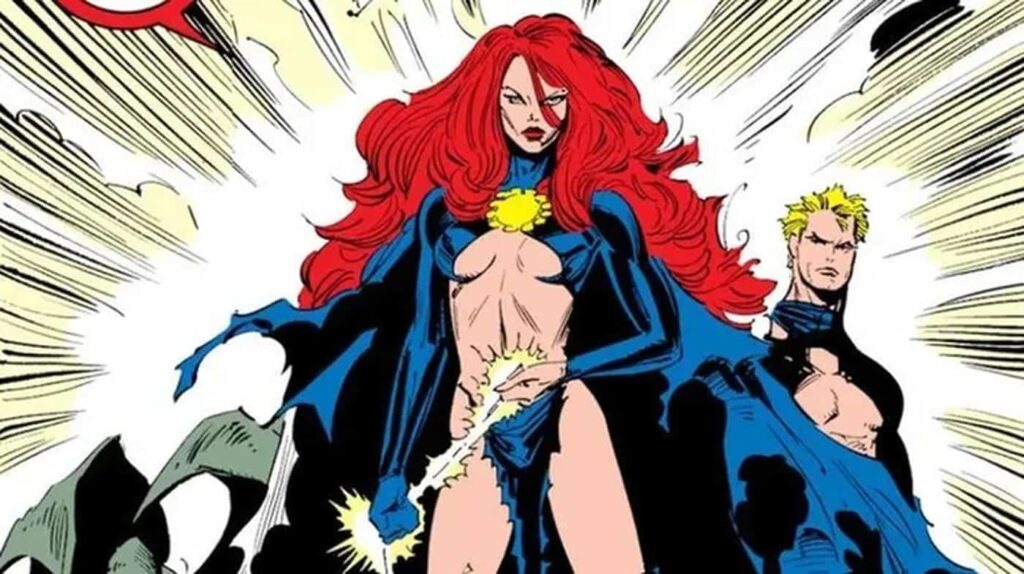
The story took a sinister turn when Madelyne was revealed to be a clone of Jean Grey, engineered by the geneticist Mr. Sinister to combine the Summers and Grey bloodlines. Devastated by the truth of her artificial existence and abandoned by Scott upon Jean’s miraculous return, Madelyne succumbed to demonic forces during the Inferno crossover event. Embracing the persona of the Goblin Queen, she became a tragic, dark mirror to Jean’s legacy and a powerful villain in her own right.

Tickling scenes with Jean Grey
In “X-Men” (2000), Jean tends to Logan, who is recovering in the infirmary after the battle against Magneto. As she feels his chest to check if the wound has healed, Logan gets agitated and stops her, saying that she’s tickling him.



Tickling scenes with Rachel Grey
Rachel Summers, also known as Phoenix II, is the powerful telepathic and telekinetic daughter of Jean Grey and Cyclops from the dystopian alternate future of Days of Future Past. Carrying the immense burden of her traumatic past and the mantle of the Phoenix Force, Rachel is historically depicted as a intense, heavily burdened character trying to find her place in the main Marvel timeline.
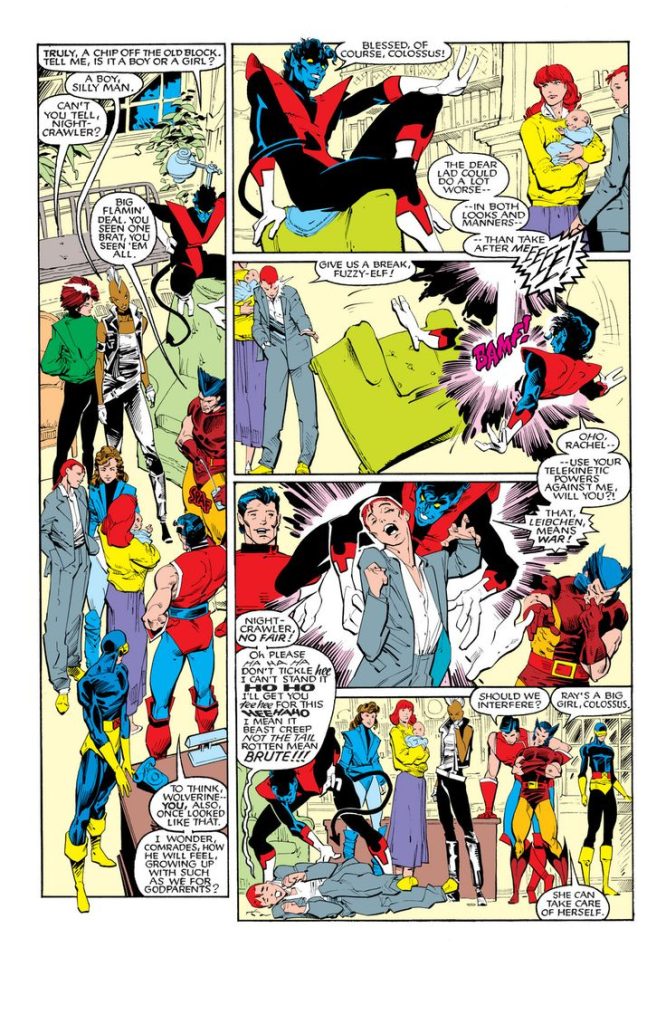
Her lighter side comes to the fore in Excalibur #3 (1988), written by Chris Claremont and illustrated by Alan Davis. While relaxing at their lighthouse headquarters with her fellow Excalibur teammates, Rachel receives a playful surprise from Kurt Wagner, better known as Nightcrawler. Capitalizing on his superhuman agility, charming swashbuckler persona, and prehensile tail, Nightcrawler ambushes Rachel in a moment of casual camaraderie and relentlessly tickles her.
The scene captures a rare moment of pure joy as the formidable cosmic host collapses into uncontrollable laughter. Alan Davis’s expressive artwork highlights the warm, familial bond between the characters, demonstrating Nightcrawler’s unique ability to bring lightheartedness and comfort to even the most traumatized heroes.
Informazioni sull'autore

Related posts:
 Tribute to Bulma | Most iconic sexy and tickling scenes
 Tribute to Invisibile Woman | Most iconic Susan Storm’s sexy and tickling scenes
 Tribute to Black Canary | Most iconic sexy and tickling scenes
 Tribute to Legs Weaver | Most iconic sensual and tickling scenes
 Tribute to Lucy Heartfilia | Most iconic sexy and tickling scenes
 Tribute to Kekko Kamen | Most iconic sexy and tickling scenes
 Tribute to Fujiko Mine | Most iconic sexy and tickling scenes
 Vote For The Greatest Ticklish Character of All Time!
 Tribute to De Kiekeboes | Most Iconic Fanny Kiekeboe’s sensual and tickling scenes
 Tickling scenes in “Lonely Lonely Rich Lady”
 Tickling scenes in “DanDaDan”
 Top 10 Tickler Heroes